

National Food Security Strategy puts competition front and center
June 12 2026 [Ottawa, ON] – This week the federal government released its National Food Security Strategy, with the goal of building a stronger and more affordable Canadian food system. Core to the strategy are measures to support more competition in food distribution, processing, and production, as well as resources for the enforcement of Canada’s competition laws. Highlights of the strategy from a competition perspective include:
- $1 billion for a food infrastructure fund to help independent grocers get products on their shelves without going through their biggest competitors
- $130 million for the Competition Bureau and Competition Tribunal to investigate anti-competitive conduct in the food system
- $1 billion in funding for Farm Credit Canada to support more competition in food processing
“The pairing of investment in alternative market infrastructure and resources to protect fair competition are a powerful combination,” said Keldon Bester, executive director of CAMP. “Today, too many independent entrepreneurs in the food system are dependent on their own competitors for the things that make their own businesses possible. Creating alternatives to these consolidated markets is key to unlocking competition in the grocery sector. We’ve been saying for years that the conversation about competition in grocery has to go deeper than the store shelves. We’re glad to see this strategy recognize that reality.”
There’s more work to be done the provincial and federal levels: banning property controls, reining in algorithmic pricing, and breaking open monopolies further up the supply chain. But the National Food Security Strategy has the structural causes of high grocery prices, not just the symptoms, in its sights.
Canada’s grocery market has been broken for a long time, but this is an important step towards fixing it.


Letters: Parting Clouds
June 7, 2026Welcome to Letters from CAMP, a newsletter on anti-monopoly activity in Canada and abroad, brought to you by the Canadian Anti-Monopoly Project. In this instalment we have:
If you enjoy Letters, please consider sharing and supporting CAMP. Now let’s dive in.
New CAMP Report Shines a Light on the Cloud Computing Oligopoly and What to Do About ItNot so long ago, businesses and governments would maintain their own IT infrastructure, keeping physical banks of servers and hardware on their own premises. Today, the landscape looks dramatically different. Cloud computing, the outsourcing of computing infrastructure to specialized providers, is now the predominant IT backbone of business and government for all but the most sensitive data. This phenomenon is only set to intensify as AI supercharges demand for flexible and large-scale computing workloads. The only problem? The current cloud computing market is three American companies in a trench coat. In our new report, Parting Clouds, CAMP tackles head on the issue of a concentrated cloud computing market. Businesses and governments depend on these services to function smoothly. But the concentration of this market has created economic and geopolitical vulnerabilities. Countries are now reconsidering the arrangement that put massive economic infrastructure in the hands of companies headquartered in an increasingly erratic country. But breaking out is no simple task. The scale and flexibility of U.S. cloud computing companies cannot easily be matched, and clients looking to leave face a wall of lock-in, opaque contracts, and predatory deals To make competition work in the market for cloud computing, Canadian policy makers need to put interoperability at the heart of their procurement, regulatory, and competition law enforcement actions. Rather than trying to force alternatives into existence, Canada, along with other middle power and unaligned nations, can create the conditions for challengers to the cloud oligopoly to emerge and thrive. The timing couldn’t be more apt: dependable and accessible compute is a cornerstone of the federal government’s recently released AI for All strategy. By working with allies to create a more competitive cloud market, Canada can reinforce the digital foundation of our economy in an increasingly volatile world. 📰 CAMP in the News 📰
Online Advertising Data Puts Members of the Military at RiskThe design of the modern online advertising market means that for a nominal fee, anyone can construct a highly detailed picture of an individual, including their near real-time location. For the average person, this is at best a creepy realization. But for individuals working in high security fields like the military, the potential for danger is much higher. This week, Reuters reported on a letter from Senator Ron Wyden detailing that U.S. military personnel were being tracked and targeted using this very data by adversaries of the U.S.. This risk is not new to policy makers. Civil society organizations, including CAMP , have pointed out that nearly every individual is vulnerable to abuse flowing from the persistent commercial surveillance system we built up around ourselves. Without proper privacy laws, precise location data is both a massive privacy issue and a threat to national security. While recent reporting focuses on U.S. soldiers, there’s nothing stopping an adversary from engaging in the same conduct against members of the Canadian armed forces or security establishment. While vendors often claim data is properly anonymized, as soon as patterns of behaviour can be tied to location it is trivial to identify an individual and find out where they live, work, and relax. This task becomes even easier as AI brings down the cost and complexity of synthesizing large volumes data. While militaries may attempt to lock down government devices, the problem will persist so long as this information is commercially available. Canada and our allies need robust privacy laws that ban the collection and use of this data if we want to keep safe those who face the highest risk. 📚 What We’re Reading 📚
Avoiding a Capital MonopolyLate last month it was announced that TMX, Canada’s largest stock exchange operator, proposed to acquire Cboe’s equities exchanges in Australia and Canada. The takeover is being pitched by the purchaser as a chance to offer Canadian companies simplicity and greater reach into capital markets. But in a piece for the Globe this week, University of Calgary Business School Associate Dean Ari Pandes lays out how the acquisition could mean less competition, higher prices, and worse service in an important channel of capital. After the deal, Canada would have a single exchange operator with over 90% of the listing market, putting the transaction well into the danger zone of Canada’s newly strengthened merger laws. As Pandes argues, the transaction would be a step backwards as we try to make our economy more competitive, productive, and appealing as a market for companies to grow. To preserve competition in the market that determines whether challengers can emerge across the economy, the Competition Bureau must act decisively and block TMX’s acquisition of Cboe’s Canadian operations. If you have any monopoly tips or stories you'd like to share, drop us a line at hello@antimonopoly.ca
|

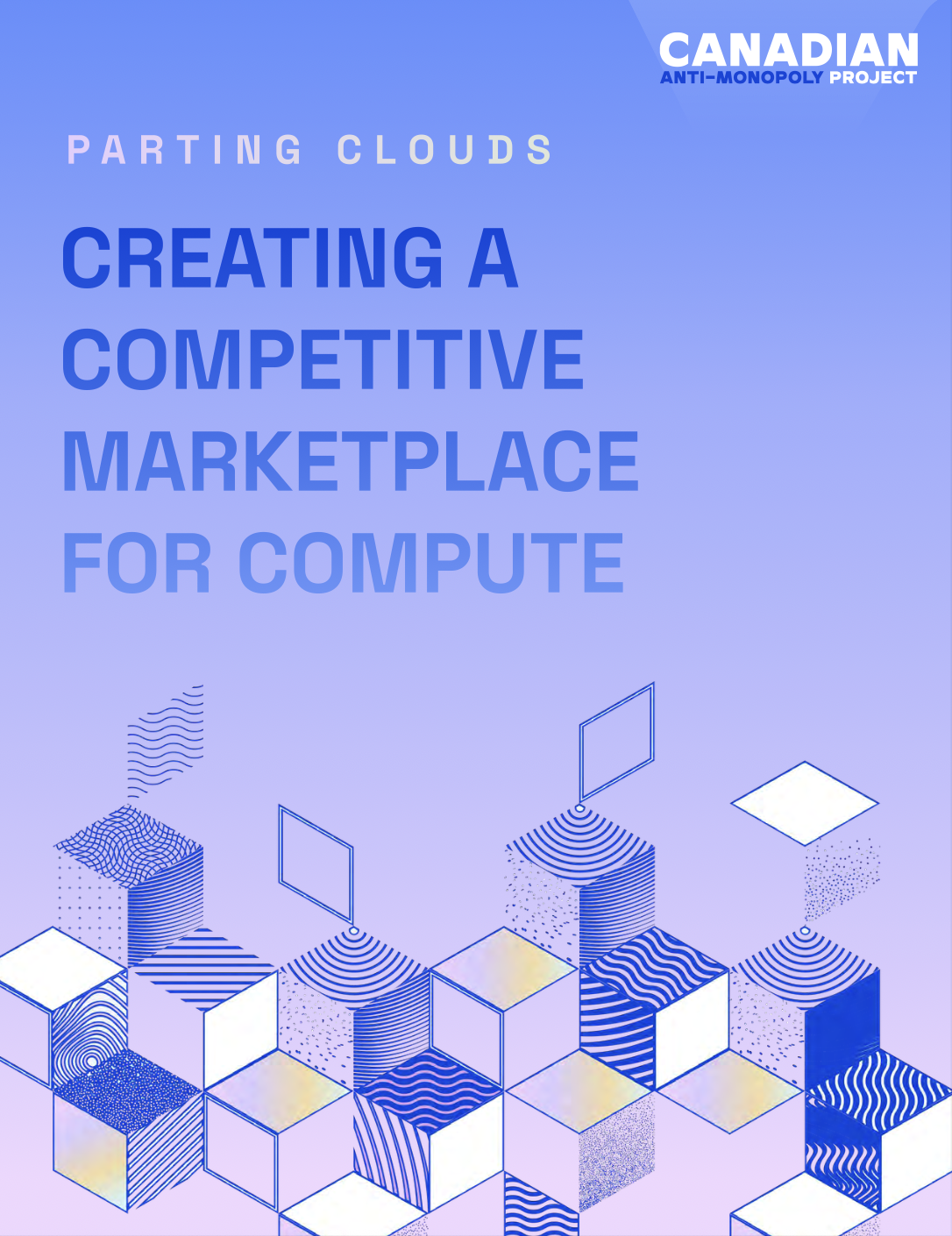
Parting Clouds: Creating a Competitive Marketplace for Compute
Three American firms — Amazon, Microsoft, and Alphabet — control 85% of Canada’s public cloud market. The federal government alone spent over $156 million on cloud services in 2022–23, the majority of it flowing to Microsoft and Amazon. For Canadian businesses, from early-stage startups to the country’s largest enterprises, there are no practical alternatives.
That concentration is a competition problem. Vendor lock-in through proprietary technologies, opaque and complex billing, bundling and tying, and the foreclosure of adjacent markets, including the evolving market for artificial intelligence, are predictable consequences of this oligopoly market. But Canada’s dependence on a handful of US hyperscalers represents a risk to sovereignty as well as competition. A country locked into a small number of providers lacks meaningful choice, whether the threat is coercion by a foreign government or rent extraction by an uncontested monopolist.
In a new report, CAMP argues that the most effective response is commoditization: making cloud infrastructure a fungible resource where interoperability standards allow workloads to move freely between providers. The metric for success is not who owns the infrastructure but whether customers can make competition work for them.
To create a competitive marketplace for compute, policymakers should:
- Require interoperability and portability certifications in all federal cloud procurement, ratifying dominant de facto standards rather than inventing new ones
- Attach binding interoperability conditions to any domestic cloud investment programs, to avoid entrenching new domestic monopolies
- Coordinate with like-minded middle powers to align procurement standards and create demand-side pressure no single country can generate alone
- Eliminate egress fees, ban self-preferencing and discriminatory bundling, and treat cloud computing as utility-like infrastructure subject to neutrality rules
- Designate a dedicated industry regulator with the technical capacity to monitor and enforce conduct and standards requirements
- Direct the Competition Bureau to launch a cloud market study and open enforcement proceedings targeting bundling, tying, predatory cloud credits, and discriminatory licensing
- Prioritize removal of CUSMA’s constraints on digital market regulation in Canada’s 2026 renegotiations

Letters: Grocery Guide
May 31, 2026Welcome to Letters from CAMP, a newsletter on anti-monopoly activity in Canada and abroad, brought to you by the Canadian Anti-Monopoly Project. In this instalment we have:
If you enjoy Letters, please consider sharing and supporting CAMP. Now let’s dive in.
CAMP Releases Guide for a Grocery Golden AgeWe talk a lot about groceries at CAMP. We’ve written reports and op-eds, given interviews, and even done a podcast or two. But taking all that in takes time, time most people don’t have. That’s why this week CAMP released our Grocery Guide, a short and digestible summary of what we think policymakers should be doing to make a grocery market that actually serves Canadians. Action couldn’t come sooner: one in four Canadians now experience food insecurity and prices are still on the rise. Canadians are stepping up to help one another out, including the folks at SAVR who have built an app to help you find the lowest grocery prices in your area. But those important individual efforts need to be matched with system-level change that delivers benefits to Canadians. Consolidated incumbents use their power to lock new entrants out of the market with practices like property controls, exclusivity arrangements, and kickbacks for access to shelf space. As algorithmic pricing takes off, shoppers will be less able to engage in the comparison shopping that allows us to save a buck or two every trip. Unwinding and preventing these harmful practices is key to a fairer future for Canada’s grocery market. There isn’t one weird trick, and there isn’t one person or institution who can solve this problem on their own. That’s why the Grocery Guide includes a comprehensive set of ideas for federal, provincial, and even municipal governments to run with. Provinces like Manitoba and cities like Toronto are already charging ahead, and we want to make it as easy as possible for other governments to follow their lead. Canadians deserve a fair and competitive grocery market, and we’ve got the recipe. 📰 CAMP in the News 📰
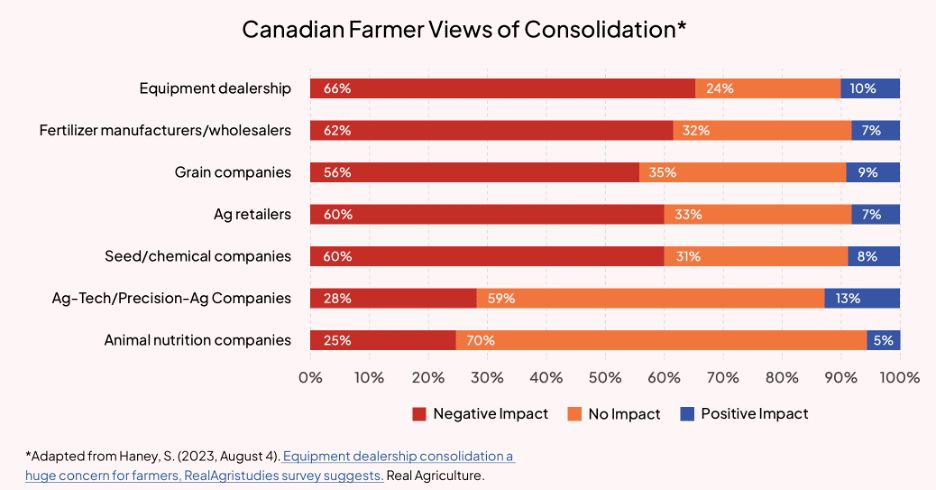
Farmers and Consumers Can Be Anti-Monopoly AlliesLetters readers know that the monopoly issues in our food system extend far beyond the grocery aisle and far beyond our borders. These days, Americans share the same anxiety as Canadians as our totals at checkout creep ever higher. Writing in the New York Times this week, Open Markets’ Claire Kelloway and Sandeep Vaheesan call for anti-monopoly action across the food system to relieve pressure on both consumers and producers. As external shocks ripple through our economy, Kelloway and Vaheesan document how the companies that have consolidated these markets are set to use that volatility to justify higher costs for farmers and consumers alike. Competition in the food system is often viewed as a zero-sum game between consumers and farmers: consumers want the lowest prices while farmers want higher prices for their products. But farmers are victims of the same consequences of consolidation. In the U.S. and Canada, decades of consolidation in meat processing, bread-making and packaged foods have created an environment where price-fixing and gouging can flourish. As CAMP covered in our report Plow to Pantry back in 2024, most farmers understand that this consolidation is harmful to their businesses.
From Plow to Pantry: Monopoly in the Canadian Food System (2024) In their piece, Kelloway and Vaheesan argue that by tackling the practices and structures in these concentrated industries, both farmers and consumers can be made better off. In Canada at least, authorities appear to be listening. Just this week, two Manitoba John Deere equipment dealerships abandoned a proposed merger amid Competition Bureau scrutiny. Last week the Bureau forced the spin-off of a Saskatchewan grain elevator to preserve competition in the grain-handling market. An anti-monopoly approach is the only way to deliver higher prices at the farmgate and lower prices at the checkout. 📚 What We’re Reading 📚
California’s Antitrust Agenda AdvancesCalifornia is one step closer to a major victory in competition and consumer protection law, with the COMPETE Act passing its vote in the Assembly and moving on to the state Senate. The COMPETE Act would reform California’s antitrust law and give state authorities the power to go after individual monopolies rather than having to rely on federal courts and regulators. As CAMP has covered, state antitrust action is increasingly important as federal authorities effectively abandon their posts under the Trump Administration. The COMPETE Act would close a key loophole in California’s antitrust law, the Cartwright Act, that exempts illegal monopolization by a single firm from state enforcement. As our colleagues at the American Economic Liberties Project point out, this loophole has stymied the ability of California’s powerful Attorney General to protect consumers and small businesses. Recently, this allowed Amazon’s practice of pressuring of third-party sellers to raise prices on non-Amazon platforms to escape state enforcement. Bringing California’s antitrust laws up to speed would be a major upgrade in the global fight against monopoly. And this isn’t the only anti-monopoly fight occurring in the Golden State. Now that the U.S. DOJ has given the green light to the hugely damaging Paramount-Warner Bros. merger, all eyes are on whether the state Attorney General will step in to block the takeover in defense of consumers, workers, and filmmakers in California and around the world. Subnational actors like U.S. states and Canadian provinces are reminding us that the anti-monopoly fight must be waged on many fronts. If you have any monopoly tips or stories you'd like to share, drop us a line at hello@antimonopoly.ca
|
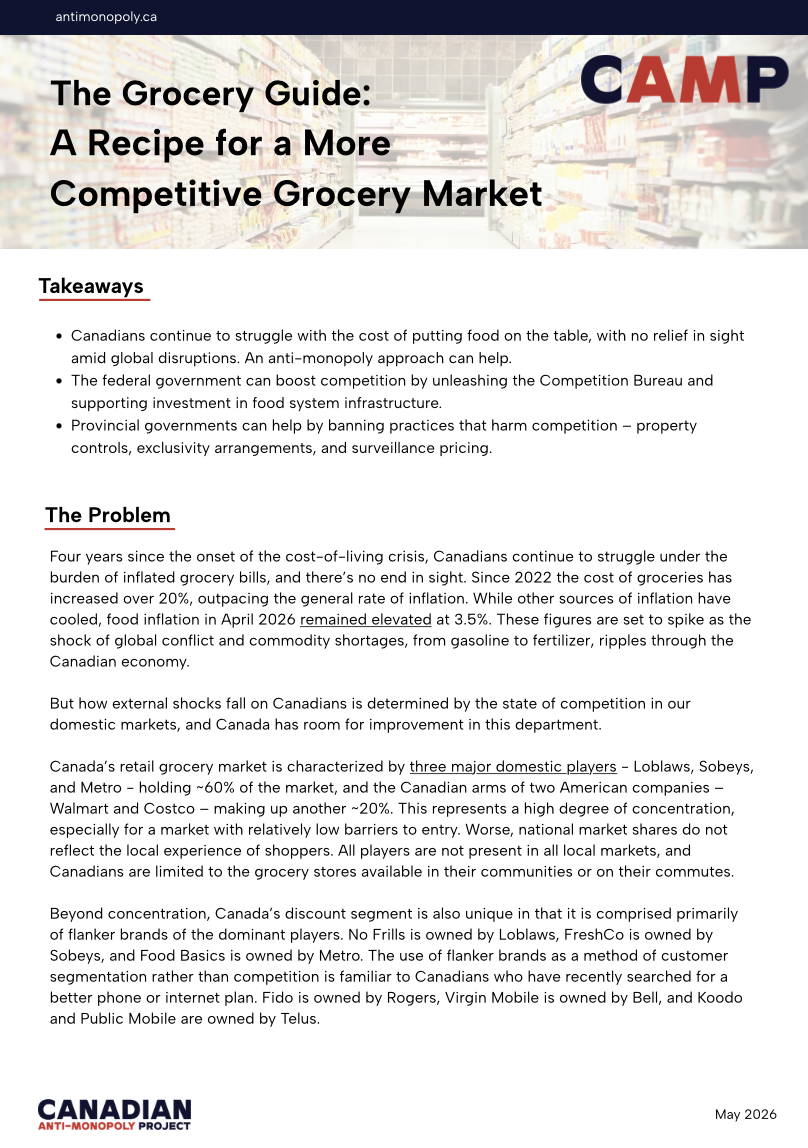
The Grocery Guide: A Recipe for a More Competitive Grocery Market
Four years into Canada’s cost-of-living crisis, grocery bills are still climbing and the fallout from global disruptions promise more of the same. But how the cost of these economic shocks land on Canadians depends on the structure of domestic markets.
Canada’s grocery market is dominated by three domestic chains and two American giants, holding roughly 80% of national market share. Discount brands that should be competing are instead flanker brands of the major grocers. Decades of consolidation have removed choice from the market and practices that lock in the power of incumbents like property controls and exclusivity arrangements remain largely unchecked.
It doesn’t have to stay this way.
In our new brief, CAMP lays out a policy roadmap for more grocery competition in Canada. Federally, it means focusing the efforts of the Competition Bureau, ensuring customers can trust what they see on the shelf, and investing in alternative food system infrastructure. Provincially, it means banning property controls and relaxing zoning rules, rolling back exclusivity arrangements and supply chain kickbacks, and prohibiting opaque personalized pricing on staple goods.
New entrants, domestic or foreign, private or public, can help. But they’re no substitute for opening up competition in grocery across the country.

Letters: Bread Cred Redemption
May 24, 2026Welcome to Letters from CAMP, a newsletter on anti-monopoly activity in Canada and abroad, brought to you by the Canadian Anti-Monopoly Project. In this instalment we have:
If you enjoy Letters, please consider sharing and supporting CAMP. Now let’s dive in.
Canadians Get Some Relief as Bread Price-Fixing Settlement Payments LandIn a change of pace, this week some money flowed out of Loblaws and into the pockets of Canadians. Nearly 9 years since the bread price fixing scheme was revealed to the public, payments for Loblaws’ bread price fixing class action settlement have started going out to consumers. A quick recap: in 2017, just before Christmas, Loblaws admitted to participation in a scheme to raise the cost of bread products as much as $1.50 over 15 years. This kicks off two tracks of action, a cartel investigation by the Competition Bureau and several class action suits against the alleged participants. To settle the class action lawsuit, Loblaws and George Weston Ltd. agreed to pay out $500 million to Canadians. This week, the fruits of that suit, a payment of either $24.11 or $49.11, are headed to Canadians who filed a claim. While Canadians should be thankful for the firms bringing these class actions, the restitution pales in comparison to the scope of the harm. Estimates put the per household cost of the scheme at $400 over the course of the conduct. Today the higher end of the payout scores you about 16 loaves of Wonder Bread. Crime shouldn’t pay. U.S. antitrust law contains the concept of treble damages, that the financial penalty of the conduct should be three times the damage caused. With treble damages and direct consumer restitution, Canadians could have seen $1,200 instead of $49 hitting their accounts. This would be a meaningful deterrent to cartel participants and deliver a benefit greater than the federal government’s recent GST rebate at no cost to the taxpayer. After nearly a decade wait, compensation for what Canadians have had to put up with is welcome. But the delay and the amount is a reminder of how much work there is left to be done to break up Canada’s cartel economy. 📰 CAMP in the News 📰
What You Don’t Know Can Hurt YouA new report out this week by Canada’s Public Interest Advocacy Centre (PIAC) examines the relationship between property controls, clauses in commercial leases and titles that affect how land can be used, and competition in the grocery sector. Drawing on domestic and international research, this landmark report explores how these covenants affect consumers and food distribution, and how Canada might deal with them. As the Competition Bureau investigates property controls and Manitoba’s move to void certain property controls, this report is an important contribution to our understanding of how these arrangements shape competition. One finding in particular: PIAC notes that comprehensive data about property controls and restrictive covenants in Canada simply doesn’t exist. These terms are often tucked away in private leases, which makes finding them difficult and costly for researchers or members of the public. Without comprehensive data about what properties are governed by these covenants, Canadians are in the dark on the extent to which competition could be muted by them. Just one example of how this data could help policy makers and Canadians, mapping property controls against food deserts could reveal their role in denying people access to fresh and healthy food and pave the way for addressing the issue. Like the bread price fixing scandal, much of the worst of monopolies occurs behind closed doors. PIAC’s research identifies crucial data gaps that put consumers, researchers, and policy makers at a disadvantage to major grocers and commercial landlords who often have overlapping roles. Answering PIAC’s calls for a national registry and database of property controls would be an excellent start and would be well matched by the Bureau by ratcheting up the legal tests for the legitimacy of existing property controls. 📚 What We’re Reading 📚
To the Model Owners Go the SpoilsIn the market for foundation AI models, the models on top of which companies build AI applications, three dominant firms have emerged: Anthropic, OpenAI, and Google. This week, Asad Ramzanali and Tom Wheeler write for Brookings that regulators must act now to ensure that this dominance is not allowed to expand into the market for those same applications. As we say in the monopoly space, everything is railroad. As the models these companies develop become infrastructure for a growing number of businesses, we need to pay attention to what they do with control over the tracks. Much of innovation in the AI application space takes the form of wrappers, services that tailor and constrain queries to foundation models to produce specific results in specific environments. This isn’t a bad thing. Training foundation models costs billions to develop and maintain, and companies provide real value by tailoring functions to specific workflows and user needs. If the advertised widespread productivity increases associated with AI are going to be realized, firms creating these services for specific applications will be doing the heavy lifting. The problem, as Ramzanali and Wheeler point out, is that model owners are competing in this application layer as well. This gives them the ability to tilt the playing field in their favour or unfairly exclude potential competitors from access to their models entirely. When your biggest competitor can control access to a critical input to your business, you’re on the wrong side of a monopoly. The fix? Ramzanali and Wheeler say foundation model providers should be barred from unjust discrimination in pricing, speed, or the quality of service they provide competitors. With fairness and neutrality as a guiding principle, we can ensure foundation dominance isn’t allowed to crowd out innovation at the application layer. If you have any monopoly tips or stories you'd like to share, drop us a line at hello@antimonopoly.ca
|