


Cutting red tape won't defeat Canada's monopolies. Here's what will.
Corporate Knights
In an opinion piece for Corporate Knights, CAMP executive director Keldon Bester shows that while the federal government is pointed in the right direction on competition, proposals for plans now need to be met with action to deliver affordability and productivity for Canadians.
Read the full article here.


Big Loblaw stretches its tentacles, on track to become Canada’s grocery landlord
The Globe and Mail
In an opinion piece for The Globe and Mail, CAMP fellow Rachel Wasserman and CAMP executive director Keldon Bester show how a commercial real estate transaction could harm grocery competition in Canada, just as governments push for more affordability at check out.
Read the full article here.

Surveillance pricing is everybody's problem
iPolitics
In an opinion piece for iPolitics, CAMP fellow Emily Osborne and CAMP advisory board member Vass Bednar lay out the potential harms of the rise in surveillance pricing in Canada.
Read the full article here.

Letters: Spring Fling
May 3, 2026Welcome to Letters from CAMP, a newsletter on anti-monopoly activity in Canada and abroad, brought to you by the Canadian Anti-Monopoly Project. In this instalment we have:
If you enjoy Letters, please consider sharing and supporting CAMP. Now let’s dive in.
Spring Economic Update’s Big Font, Low-Calorie Approach to CompetitionLike so many think tanks, we engage in the time-honoured tradition of opening government announcements and slamming Ctrl + F for watchwords of choice like “competition” and “monopolies.” Though we’re familiar with the heartbreak of these efforts delivering “Not found,” this week’s Spring Economic Update was different, with an entire heading dedicated to Driving Productivity and Affordability Through Competition. A good start if we’ve ever seen one. But after properly digging in, now years into a cost-of-living crunch only set to worsen in the coming months, the federal government is still wrapping its head around how to walk the walk on competition. First, what was under this august title? A commitment to address red tape that restricts competition, a recap of already ongoing efforts in the telecoms sector, and a recap of already ongoing efforts in the banking sector, and mention of a Whole of Government approach to competition. The Whole of Government approach is welcome news, echoing the efforts of the Biden Administration and recommendations of CAMP allies Vass Bednar and Denise Hearn. All that’s missing is a Whole of Government approach. While more is promised “in the coming months,” it’s an unfortunate sign that we’re still at this stage of the process. So, what should this announcement have included? New resources for the Competition Bureau and a new mandate for the next Commissioner of Competition to focus their efforts on driving affordability. Direction to the CRTC to use its powers to support independent competitors, instead of slowly unwinding the system as it’s currently doing. New support for financing alternative infrastructure in key agricultural markets like processing, distribution, and wholesale. Stronger penalties for, oh we don’t know, continuing to lie to consumers about the products they’re purchasing. Going beyond whole of government, we should have a whole of governments approach that enlists provinces and municipalities in targeting the issues they’re best suited for, like Manitoba’s ongoing fight to unleash grocery competition. Taking a step back, while the lack of detail is frustrating, it is an important win that the federal government has the right diagnosis for the problems facing Canadians today. Now we need to do the hard work of filling in the detail under the headline. 📰 CAMP in the News 📰
How to (Actually) Fix Flying in CanadaIn the chatter following the Spring Economic Update, one idea caught the imagination of the Canadian commentariat: the possible privatization of Canadian airports. The idea of selling off these public assets is not a new one. The previous government mulled the same decision during the Morneau era, and the topic periodically rears its head in Canada’s policy discussion. While in this round the move is primarily pitched to fund Canada’s new Sovereign Wealth… Fund, it’s worth digging into the complementary claim that it would reduce prices for air travelers. Brace yourselves, but CAMP’s position is that private capital works best when exposed to competition. Outside of Canada’s largest cities – Toronto and Montreal – Canadian cities do not have meaningful airport competition. The premise of privatization lowering costs is that airports will be run more efficiently and pass those savings on to consumers. But businesses are in the business of making money, and we depend on competition to channel that to positive outcomes. Without meaningful competition, any gains will go to shareholders first, not travelers. CAMP knows how Canada can actually lower the cost of flying and more competition rather than a fire sale is the answer. We can change the fees that fund our air travel infrastructure to support regional and low-cost carriers, including having the federal government stop collecting rent from airports as it did during the pandemic. We can also bring in foreign players who invest in Canadian operations and adhere to our transportation safety standards. Finally, we can create a system that offers utility service to regions reliant on dependable air travel service. Changing owners doesn’t matter when the players on the field are the same. If Canadians want cheaper flights, we need to create the conditions for competition. 📚 What We’re Reading 📚
Axe the Scam TaxAnother Easter egg in the Spring Economic Update was mention of the government’s national anti-fraud strategy, the public consultation for which wrapped up this week. Each year, online fraud and scams affect tens of thousands of Canadians, costing us a reported $700 million and with a likely much higher price tag given the level of underreporting. In response, the federal government says it wants to increase resources for combatting these scams and to introduce regulation that imposes duties on the payment processors, telecoms, and online platforms who each have a role to play in stopping the spread of scams. CAMP's submission to the consultation follows the release of our World of Scams report focusing on the role of the advertising platforms run by Google and Meta in facilitating this tidal wave of scammers. We’re in good company. Just this week, a new report out from GoodBot and Check my Ads contributes Canadian-specific research alongside robust policy recommendations for addressing Canada’s scam tax. The authors detail the range of scams lurking on advertising platforms, and the tactics tech companies use to resist regulation and capture industry associations while profiting from the scammers on their platforms. As the government gets serious about scams, we’re seeing commonalities emerge on a path toward a scam-free future. We need regulation to change the incentives that make it profitable for online platforms to turn a blind eye to scams. This means advertiser verification and access to ad libraries and APIs, meaningful fines for a lax approach to scam ads, and potentially even a new regulator. It should be in these companies’ interest to address the tsunami of scams on their platforms, but the sheer volume of fraudulent content online shows the current model isn’t up to snuff. If you have any monopoly tips or stories you'd like to share, drop us a line at hello@antimonopoly.ca
|


Letters: Mapping Monopoly
April 26, 2026Welcome to Letters from CAMP, a newsletter on anti-monopoly activity in Canada and abroad, brought to you by the Canadian Anti-Monopoly Project. In this instalment we have:
If you enjoy Letters, please consider sharing and supporting CAMP. Now let’s dive in.
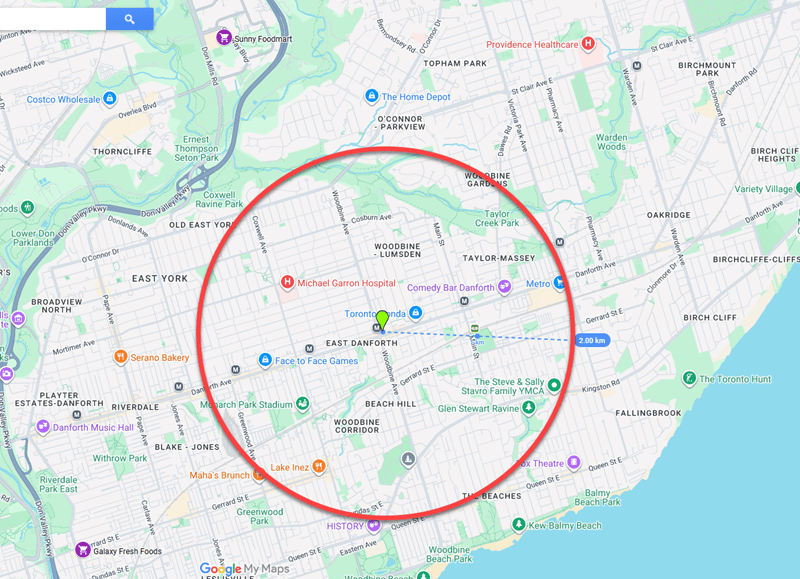
Concerned Canadian Shines a Light on Grocery RestrictionsMonopolies move quietly. While Canadians are familiar with the inflated bill at the end of the month or at the checkout, much of how monopolies control the markets around us happens without our knowledge. As a result, Canadians count on media, regulators, and civil society to shine a light on what’s really going on in our economy. But sometimes, Canadians take matters into their own hands for the benefit of their fellow citizens. That’s exactly what Jacob Filipp, a Toronto marketing professional, has done. Jacob has put together a public collection of restrictive covenants from commercial leases in Canada. Normally, a website listing commercial leases would not be headline news. But these contracts are different. The contracts Jacob has published demonstrate the property controls that major grocers have used to squash more intense grocery competition. Just one example, a Valu-Mart (Loblaws) lease in Toronto that prevents their landlord from leasing property to another grocery store within a two-kilometre radius. But the idea of two kilometres is a little abstract, so Jacob has gone the extra mile to show that this restriction covers the distance between five subway stops.
Property controls can be even more problematic in rural communities, where a single agreement could shut an entire community out of competition that would otherwise thrive. Movement against property controls is beginning. The Competition Bureau is investigating their use, and Manitoba has already stepped up with legislation to ban them, but much of Canada is likely still under their hold. As we brace for another round of price increases arising from global instability, policymakers should be making big moves to capitalize on the good work of Canadians like Jacob. 📰 CAMP in the News 📰
Independent Canadian Cinemas Come Out Against Paramount-Warner Bros.CAMP has been clear on the potential harms of the proposed Paramount-Warner Bros merger, which was approved by Warner Bros shareholders this week. For Canadians, the deal will mean less content at higher prices, and less domestic content production for screens of all sizes. But the takeover has the potential to harm more than just consumers and movie production crew. This week, the Network of Independent Cinema Exhibitors (NICE) released their statement on the proposed merger, calling on the Competition Bureau to impose conditions on the transaction that will preserve competition for independent cinemas. The biggest issue highlighted by NICE is the control over Warner Bros.’ vast catalogue of classic films, many of which make up the bread and butter of repertory cinemas. In the past, Warner Bros has provided independent Canadian cinemas with convenient access to this catalogue on favourable terms. Under new management, there’s no guarantee this will stay the case. NICE points out that after Disney’s 2019 acquisition of Fox, not only did the volume of new releases decline, but the terms on which cinemas could access the Fox catalogue became demonstrably worse, making life more difficult for cinema operators. Independent cinemas are important institutions, especially in the smaller communities where they can often represent rare cultural and community venues. They’re also an important venue for Canadian film, and a rare bright spot in an industry that has seen flat growth since the pandemic. In 2025, indie cinemas around the world saw over 40% growth compared to 4% in the wider market. While the merging parties are both American, Paramount-Warner Bros. will have a profound impact on movie consumption and production in Canada. NICE’s letter to the Competition Bureau is a reminder that we deserve a say in the outcome of the transaction. 📚 What We’re Reading 📚
Unsealed Evidence Shows Amazon Pushing Up PricesThis week, as part of an ongoing antitrust case, California’s Attorney General has unsealed a trove of documents that allege Amazon employees persistently pushed to keep the price of goods such as underwear, dog treats, and eyedrops high on other e-commerce platforms. The evidence released runs counter to Amazon’s longstanding corporate principle of consumer obsession. Instead of being obsessed with serving customers, Amazon appears more obsessed with ensuring competitors don’t offer more competitive prices. The unsealed emails paint a picture of suppliers being used as go-betweens to coordinate prices between other e-commerce platforms like Walmart.com. If an employee noticed another retailer was offering a better price, Amazon would approach suppliers like Levis, Hanes and others, and ask them to “‘fix,’ ‘correct,’ ‘increase,’ ‘raise,’ or ‘look into’” prices. Unsurprisingly, suppliers complied: deals were cancelled, prices were raised, and in some cases, Amazon followed by raising their own prices, robbing shoppers of important price competition. Competition shouldn’t be dictated over email, and we have competition laws to go after exactly this kind of conduct. Amazon’s size gives it a gravity that allows it to compel suppliers to act in its interest. Being removed from Amazon’s marketplace, the largest e-commerce platform in Canada and the U.S., is not an option for many retailers. Using that power not to offer the most compelling price, but to bring other competitors to its level, puts additional pressure on cash-strapped consumers. The Competition Bureau is currently investigating the same conduct, and Canadians deserve answers as to whether the same collusive practice is occurring up north. If you have any monopoly tips or stories you'd like to share, drop us a line at hello@antimonopoly.ca
|


CANADALAND Short Cuts: Does Canada Need Government Supermarkets?
CANADALAND Short Cuts
CAMP executive director Keldon Bester joins Canadaland’s James Nicholson to discuss the monopolies in Canada’s food system, recent policy enthusiasm for tax credits and public grocery stores, and the creeping rise of creepy surveillance pricing.