

CAMP Statement on StubHub and Ticketing Market Failures
June 24 2026 [Ottawa, ON] – The Canadian Anti-Monopoly Project is calling for stronger competition and consumer protection enforcement following reports of StubHub customers paying for tickets they were told were guaranteed, only to discover at the last second that those tickets may not have existed.
“This is what we should expect when concentrated and opaque ticketing markets are left under-policed,” said Keldon Bester, Executive Director of the Canadian Anti-Monopoly Project. “Consumers pay thousands for tickets they are told are guaranteed, only to find out at the last second that the tickets never existed in the first place. A marketplace should not be able to take money for seats a seller does not control, market them as guaranteed, and leave consumers outside the venue fighting for refunds while their favourite team hits the field.”
“The Competition Bureau should be taking a hard look at this under its deceptive marketing provisions as soon as possible. Misleading actions like this need appropriate penalties to deter future deception. At the same time, provinces should be using their consumer protection authorities to make clear that this kind of conduct is offside at both levels of government.”
CAMP sees the StubHub issue as part of a larger problem in live events and ticketing: concentrated gatekeepers, weak transparency, and too much risk being pushed onto fans. These failures sit alongside a wider pattern of regulatory concern about how resale platforms present prices, guarantees, and consumer protections.
Canadians should be able to trust that when a platform sells them a guaranteed ticket, that guarantee means something. The fix has to include stronger competition and consumer protection enforcement, clearer rules against deceptive conduct, and real accountability for platforms that profit from these transactions.

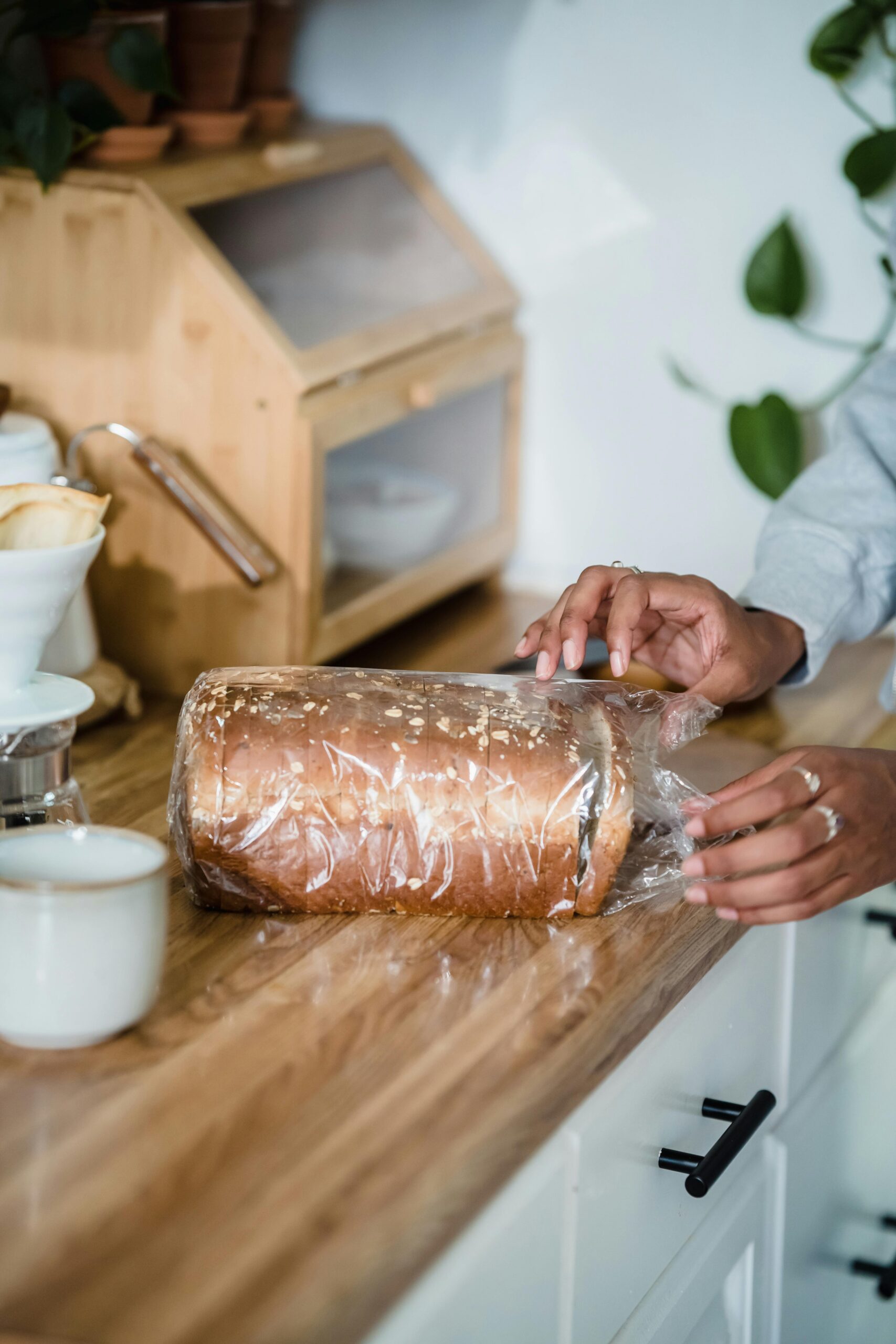
Bread price-fixing settlement payments show Canada’s competition laws are still failing consumers
May 21 2026 [Ottawa, ON] – As Canadians begin receiving payments from the $500-million packaged bread class-action settlement, Canadian Anti-Monopoly Project (CAMP) says the small individual refunds are a reminder that Canada’s competition policy is still not delivering meaningful restitution for consumers harmed by corporate misconduct.
Approved claimants are reportedly receiving $49.11, or $24.11 if they previously received a $25 Loblaw gift card. The payments follow a class action lawsuit related to alleged industry-wide bread price fixing involving packaged bread products purchased by Canadians over a period spanning more than a decade.
“Canadians are right to be angry that one of the most notorious competition scandals in the country has translated into payments of less than $50,” said Keldon Bester, Executive Director of CAMP. “We appreciate the efforts of the firms bringing these class action suits, but the bread price-fixing case should have been a turning point in Canada. Instead, nearly a decade later, grocery competition is worse, consumers are still paying the price, and our laws are still struggling to deliver real accountability.”
The settlement comes as grocery affordability remains a major concern for households across Canada. The bread price-fixing case exposes the limits of a system that relies too heavily on after-the-fact enforcement, lengthy legal processes, and settlements that provide limited relief to individual consumers. By allowing the grocery market to consolidate, regulators have created the conditions for coordination and collusion between players.
“The bread price fixing scandal was a massive transfer of wealth from everyday households to our oligopoly grocery market, and to date only a single firm has had to pay a penalty related to the government’s case,” said Bester. “When any restitution arrives nearly a decade later , it shows how poorly the system is designed to repair harm after it has already happened.”
“The lesson from the bread settlement is not that the system worked,” said Bester. “It’s that consumers waited years for a fraction of what they lost, while the grocery sector became even more concentrated and even harder to discipline. Canada needs competition policy that protects people before the damage is done.”

CAMP Calls on Canada to Remove Restrictive Digital Trade Rules from CUSMA
May 20, 2026 [Ottawa, ON] – This week, the Canadian Anti-Monopoly Project (CAMP) released Why Canada Should Delete Restrictive Digital Trade Rules from CUSMA, a new brief arguing that Canada’s upcoming CUSMA review is a critical opportunity to reclaim policy space over digital markets dominated by major U.S. technology firms.
The report warns that while CUSMA is often discussed in terms of tariffs and goods, its digital trade chapter has major implications for Canadian competition policy, consumer protection, privacy, online harms, data sovereignty, and the ability to hold dominant platforms accountable.
CAMP identifies five CUSMA provisions that should be removed: Articles 19.4, 19.11, 19.12, 19.16, and 19.17. The report finds that these rules can be used to block or chill Canadian efforts to regulate digital platforms, limit scrutiny of algorithms, restrict data governance, frustrate right-to-repair policy, and undermine platform accountability.
“As Canada heads into the 2026 CUSMA review, policymakers need to be clear about what is at stake,” said Keldon Bester, Executive Director of CAMP. “Free trade should not mean locking Canada into rules that protect Big Tech’s dominance and limit our ability to govern digital markets. Canadians need stronger privacy protections, fairer competition, real platform accountability, and control over how their data is used. That requires deleting the restrictive digital trade rules that stand in the way.”
The report argues that Canada can preserve the benefits of trade while removing provisions that constrain domestic digital policy. CAMP recommends that Canada defend its ability to legislate on privacy, online harms, fraud prevention, data protection, cloud infrastructure, right to repair, and competition in digital markets.
The 2026 CUSMA review gives Canada a direct policy window to address rules negotiated in an earlier era and ensure trade commitments do not override democratic oversight of the digital economy.
From Plow to Pantry: Monopoly in the Canadian Food System
In this report
Amid a once in a generation cost of living crisis, Canada’s food system is under the spotlight. As a record number of Canadians face food insecurity, the cost of putting food on the table is a top concern for families across the country.
Executive summary
Canada is the world’s 5th largest exporter of agriculture and agri-food products, achieving $92.8 billion in exports in 2022, with the entire sector generating 7% of GDP ($143.8 billion) and providing 1 out of every 9 jobs across the country.1 Growing the products that keep our communities and communities around the world well fed is a cornerstone of the Canadian economy, but that position has not insulated Canadians from the rising cost of food.
One reason is that this crucial sector has taken part in the same march toward monopoly characterizing other markets across the Canadian and global economy. The recent parliamentary testimony of grocery CEOs and the boycott of Canada’s largest grocer Loblaws has shown a deep dissatisfaction by the Canadian public with the current state of competition in the retail grocery space. But the consolidation that has left Canadians with fewer options for putting food on the table has not been limited to the grocery store shelves. All along the agricultural supply chain, Canadian consumers, producers, and entrepreneurs face fewer choices and are forced to contend with domestic and global giants. While the sticker shock now familiar to Canadians is one consequence of this path, there are more subtle ways in which consolidation of the supply chain causes harm.
Rural communities have been hollowed out by the loss of small and medium farm businesses as producers exit the industry due to falling net incomes and the trend towards agriculture being conducted by large corporate entities.2 These lost farms represent the agriculture of the middle—the operations that exist outside of the commoditized megafarms—which make up the social fabric of our rural spaces and have the flexibility to produce differentiated high-value products that respond to changing consumer preferences.3 These farmers are the stewards of a significant portion of Canadian land and their ability to manage the ecosystem and soil health of their operations is crucially important not only to the ongoing productivity of their business but also driving the economies of their local communities and mitigating the environmental impacts of producing food. Canada has seen how sacrificing resiliency for efficiency created serious supply chain bottlenecks during the COVID-19 pandemic. To avoid those disruptions from recurring Canada must begin to build a more diverse and dynamic food system.

But to address these issues, Canadians must first understand the nature of the problem. Tracing the current state of monopoly throughout Canada’s food system, several issues emerge:
Key findings
- While concentration in the grocery sector has received recent attention, consolidation has occurred at all levels of Canada’s food system at the expense of consumers and producers, with regional concentration more severe than national concentration.
- Farmers in Canada have repeatedly identified concerns about consolidation and the future of their businesses, with concentration in markets for farming equipment, fertilizer, agricultural retail, seeds and chemicals seen as having the biggest negative impact.
- Since 2001, the Competition Bureau has reviewed at least 27 transactions across the food supply chain and has never successfully blocked a merger or acquisition, despite calls from multiple levels of government to prevent further consolidation in agriculture markets.
- Since the pandemic, Canada’s largest grocers have shifted the cost of renovation and infrastructure investments to suppliers while buying back nearly $2 billion of their own shares.
- Today, Canada has 150,000 fewer farms than it did in the 1970s, with small farms largely replaced by large-scale corporate agriculture, particularly in the case of pig and poultry operations, increasingly disconnected from rural communities.
To mitigate and reverse the harmful effects of this consolidation, Canadians must work to return fair competition to the food system. While food inflation has begun to abate in Canada, only fair and dynamic markets will promote affordability today, guard against future cost of living pressures and create a resilient and dynamic food system. To that end, several steps are available today for policymakers and regulators:
Recommendations
- The Competition Bureau must use its new market study powers in partnership with Agriculture and Agri-Food Canada to investigate the competitive dynamics across agricultural markets where competition issues are most pressing for farmers – farm equipment, fertilizer, agricultural retail stores, as well as seed, chemical and grain companies.
- Assertively enforce the expanded abuse of dominance and anti-competitive agreements provisions of the Competition Act to address instances of unfair methods of competition.
- Using newly strengthened merger enforcement powers, increase scrutiny of mergers and acquisitions all along the agricultural supply chain and conduct retrospective analyses of past mergers.
- Move from a voluntary to mandatory grocery code of conduct and expand its scope to include anti-competitive practices such as slotting fees, conditional kickbacks and exclusive dealing.
- Establish a right to repair framework that addresses the use of digital locks and returns control to independent farmers, mechanics and equipment manufacturers.
- Task Statistics Canada with improving data collection and public availability of key statistics like market share, concentration ratios, and farm share of food dollars, with the USDA’s Economic Research Service as a model and potential collaborator.
Competition in Canada’s food system
The cost of putting food on the table has been top of mind for Canadians ever since rising inflation drove grocery prices 23% higher compared to before the onset of the pandemic. These rising prices created a parallel rise in food insecurity, with over 8.6 million Canadians experiencing food insecurity as of 2023—42% more since 2019.4 Prices for food purchased from stores outpaced headline consumer inflation from October 2021 through February 2024,5 peaking in September 2022—a month that marked the fastest pace of price acceleration in 41 years at 11.4% annually.6 Inflation has touched every aspect of the lives of Canadians, exacerbating a cost-of-living crisis that has hit lower-income families hardest, increased social isolation,7 and delayed plans for retirement, buying a home, or starting a family.8 First Nations communities have been acutely affected by food inflation as on-reserve households were already experiencing food insecurity at a rate four times higher than non-Indigenous people in Canada prior to the onset of the pandemic.9
Canadians’ anger at this situation has largely been directed towards the grocery sector, leading to multiple parliamentary appearances by corporate executives and a national boycott of our leading retailer, Loblaws. That grocers are a prime target is not surprising; the three leading firms have grown their profits 50% in the past four years as the percentage of Canadians accessing food banks has risen 78.5% since 2019, with over half of those visits in 2023 coming from first-time users.10 This rise in profits has drawn attention to the concentrated nature of the grocery retail sector. The top four firms control 66% of the market (Loblaws, Sobeys, Metro, Costco) and consolidation has happened at a steady pace since 1986, with 15 significant mergers reducing the number of major competitors from eight to five.11
The rising price of food also follows past breaches of trust between the public and major grocers, including the exposure of the bread price-fixing cartel and the coordinated removal of so-called “hero pay” during the pandemic.12 But the issues with our food system are not limited to the grocery store shelves. In fact, Canada’s entire food system is deeply unbalanced. While primary producers—farmers, ranchers, growers—are largely independent and disaggregated, they are wedged between globally concentrated input suppliers and food processors, causing a host of competition problems before food even reaches the oligopolistic grocery retail markets. Canadian farmers are price-takers trapped in the middle of a U-shaped power asymmetry between the companies from which they buy inputs and the companies to whom they sell their products (see Figure 1 for an example in the beef supply chain).
Relative concentration in the beef supply chain
Canadian producers are aware of this dynamic and have been raising the alarm for over a decade. A wave of mega-mergers that began in 2015 resulted in the Big Six agro-chemical companies becoming the Big Four (Bayer-Monsanto, BASF, Corteva, ChemChina-Syngenta).13 Five years prior to this increased consolidation, farmers were already drawing the connection between concentration and their bottom line, noting that a lack of competition was “the main culprit behind declining farm income”.14 As farmers face falling numbers of input suppliers, processors and retailers, their independence declines in the wake of the power of these food giants. Using Statistics Canada data from 2008, Agriculture and Agri-Food Canada showed that the majority of subsectors in food processing were above a CR4 (the percentage of market share held by the four largest companies in a market) of 40%, the threshold which commonly signals higher concentration and the potential for oligopolistic conduct.15 This issue is even more acute today; 90% of Canadian farmers surveyed in 2023 (n = 593) reported they were concerned about consolidation in their industry, with the highest perceptions of negative impact coming from the input provider stage of the supply chain: equipment dealers (66% of respondents), fertilizer manufacturers (62%), seed and chemical companies (60%), and grain companies (56%).16
Canadian farmer views of consolidation
- Negative impact
- No impact
- Positive impact
How did we get here?
The situation in Canada is not unique and did not occur overnight. It is the product of a historical weakness in our nation’s approach to regulating competition, a century long shift in power away from farmers, and a global march toward high levels of consolidation in agricultural markets. Enacted in 1986, Canada’s Competition Act was written by the very businesses it was intended to police to be favorable to consolidation across the economy, matching a global shift towards a lax approach to competition only beginning to change today.
Power in the food supply chain increasingly rests with the global input providers that exercise their control through farmers’ data, intellectual property rights, bundled products and services, and financial services. This transfer of power has been facilitated by the rise of transnational corporations in agriculture that have fueled their growth through the roll up of the global food system. Half of the world’s commercial seeds are controlled by the Big Four (Bayer-Monsanto, BASF, Corteva, ChemChina-Syngenta). The top two firms own 40% of the market with Bayer at 23% and Corteva at 17%, compared to 25 years ago when the top 10 companies controlled 40% of the market. These same four firms have 62% of the global pesticide market and following the merger of ChemChina and Sinochem (owner of Syngenta) into Sinochem Holdings Corp. Ltd., nearly 25% of this market is controlled by one entity.17
The top four firms in animal pharmaceuticals control 61% of the market, livestock genetics is concentrated among 8 major players with commercial poultry genetics being most heavily concentrated among only three firms (EW Group, Hendrix Genetics, and Tyson Foods), and farm machinery is dominated by four firms led by Deere & Co. at 18% of the global market. Agricultural commodities have become so concentrated they now have their own acronym; the ABCDs, referring to the transnational giants ADM, Bunge, Cargill and Louis Dreyfus, who are responsible for 70% of the global market.18
Concentration of the global food system
This trend is not limited to input suppliers.19 Beyond the store shelves, Canada’s food system shows how power is exerted on the most vulnerable segments of our supply chains at the cost of producers, workers, and consumers. Charting this march of consolidation in Canada, the Appendix contains a list of significant mergers and acquisitions in agriculture and food that the Competition Bureau, Canada’s competition law enforcer, has reviewed since 2000. Out of 31 transactions (at time of writing the Bunge - Viterra grain industry combination is still pending), not a single case has been blocked by the Competition Tribunal, Canada’s competition court. When it has acted, the Competition Bureau’s strategy in addressing the rise of monopoly power in Canada’s food system has been limited to narrow remedies that often swap market share between two players without addressing the forces that have made the market so dependent on only two players.20
Looking across the food system, this report examines the impact of this process across the supply chain and highlights the concerns for farmers, consumers and entrepreneurs.
Input suppliers
Seeds and chemicals
Fertilizer accounts for about one-quarter of the cost of running an average farm and this key ingredient is controlled by four companies: Nutrien, CF Industries, Koch Fertilizer, and Yara.21 In June 2023, 62% of Real Agriculture survey respondents said that consolidation among fertilizer manufacturers has a negative impact—a sentiment that might stem from the sting of fertilizer costs skyrocketing 80% in 2022 while manufacturers reported record profits.22 This has not always been the case, and Canadian farmers had more choice before the Competition Bureau allowed the creation of Nutrien through the 2018 merger of Agrium and Potash Corporation of Saskatchewan. Now Canada’s leading producer of fertilizer, Nutrien controls 44% of ammonia and 46% of urea production.23 The combined company also controls 60% of North American potash capacity, which triggered reviews by other jurisdictions’ competition authorities. The U.S. Federal Trade Commission (FTC) ordered the divestiture of a nitrogen plant and a phosphate facility and China and India required the company to divest its holdings in other international potash businesses, but these remedies did not touch Nutrien’s North American potash assets.24 Even before its further consolidation, the fertilizer market showed collusive conduct, with Potash Corporation and Agrium paying $44 million and $10 million respectively in 2013 to settle a U.S. class-action lawsuit that alleged the companies colluded with competitor Mosaic to keep prices artificially high.25
Canada is currently the top global producer and exporter of canola, with 43,000 farmers annually producing almost 20 million tonnes of canola worth $29 billion to our economy.26 Prior to 2018, the Big Six agrochemical companies (BASF, Bayer, Dow, DuPont, Monsanto, and Syngenta) operated 35 locations across the country to compete for Canadian canola growers’ business.27 After a wave of mega-mergers in 2018 in which the Big Six became the Big Four (Bayer-Monsanto, BASF, Corteva, ChemChina-Syngenta), Canadian canola growers became dependent on just two companies for critical seed varieties: either Bayer-Monsanto or BASF.28 In May 2018, Bayer agreed to divest assets to BASF SE as per an agreement reached with the Competition Bureau regarding Bayer’s merger with Monsanto. Prior to the sale, BASF supplied 5% of the market and under the divestment agreement it gained Bayer’s 55% market share, leaving BASF with 60% of canola seeds.29
Consolidation between firms at this initial link of the food supply chain has profound negative effects on farmer autonomy by removing choice in input providers. The mergers have also slowed progress on research into applications of biotechnology on corn, cotton, and soy, with thousands of R&D positions cut from DowDuPont following the completed merger.30 These mergers narrow the range of existing and new products available to producers, ultimately lowering consumer choice at the end of the supply chain.31 Further constraining farmers, Bayer and BASF are integrated agro-chemical businesses that employ bundling strategies to tie proprietary seeds together with chemicals for crop protection. When these strategies are used from a dominant position in a market with limited options, farmers are left without alternatives for what to grow and how to grow it.32
The agro-chemical companies are heavily invested in preserving and enhancing the gains from consolidation. Seed industry groups came together in 2021 to form Seeds Canada and began lobbying the federal government to grant them the power to regulate variety registration and standards, proposing a mechanism that would allow them to limit farmers’ access to royalty-free public domain varieties.33 The Canadian Seed Growers’ Association, the institution that holds the responsibility for seed certification, refused to join the new body when it was formed, and its members are strongly in favour of the federal government continuing to allow growers to manage their industry and for the Canadian Food Inspection Agency to maintain regulatory authority.34
Farm equipment suppliers and dealers
Farm operations are increasingly reliant on big data platforms that collect data through sensors monitoring everything from soil health to crop yield to how many steps a cow takes each day. The 21st century farmer receives numerous daily recommendations on how to manage and optimize their operations based on data generated from farming operations around the world. But this transformation of the modern farm has created a dependency on farm equipment manufacturers as technology providers and owners of the data generated by the farmers themselves. The major players in the North American market are John Deere & Company (who control over 53% of large tractors), CNH Industrial at 35% (parent company of Case IH and New Holland), and AGCO with 7% (owners of Fendt and Massey Ferguson brands).35 These large equipment manufacturers operate in the supply chain as original equipment manufacturers (OEMs) and until recently, farmers could mix and match OEM parts with products from third-party short line manufacturers to design the most effective system for their operation. This co-existence began to wither in 2021 when John Deere introduced the X9 model, a proprietary combine that only operates with John Deere hardware, blocking interoperability and limiting farmer choice.36
Agricultural OEMs further limit interoperability by tethering physical products to software authorizations to keep farmers tied to a manufacturer, often requiring the customer to use only the manufacturer’s brand of tools to get the full value of the product rather than any third-party services that could have superior features.37 John Deere employs such tactics along with terms of service that create a “digital lock” preventing farmers from repairing their own equipment when it breaks down, resulting in costly delays to time-sensitive operations like planting, spraying, and harvesting, as producers wait for certified mechanics to be available to travel to their farm and complete a repair. These terms of service also place the equipment manufacturer as the owner of the data extracted from the farms and charge farmers a subscription fee to access the data from their own operations—data they generated but cannot own nor directly access from the equipment they own.
Big data provided by farmers is now central to the business models of equipment manufacturers and seed and chemical companies, as the personal data from individual farms can be aggregated into large-scale yield and weather datasets that can be re-sold and packaged into digital services.38 Conduct like this is just one reason Canadian producers rank consolidation among equipment dealers as their highest concern, ahead of fertilizer manufacturers, seed and chemical companies, agricultural retailers, and grain companies.39 This pressure from manufacturers has also driven consolidation in the equipment dealer market, responsible for distribution of OEM hardware.40 Farmers note that the current market for equipment dealerships makes it difficult to get competitive quotes and a loss in service quality and availability—the hallmarks of concentrated industries that do not have to compete on product and service terms because they have captive markets.41
Producers
Though still the most diverse segment of the food system, census data indicates continued consolidation at the producer level as well. There were 189,874 Canadian farms in 2021, a loss of 1.9% from 2016 (193,492) and almost 16,000 fewer farms than the 2011 census reported (205,730).42 While this is the lowest rate of decline in farm numbers in the past 25 years, Canada has lost nearly 150,000 farms since 1976, nearly all of them small operations (farms under 1,600 acres). On the opposite end of the spectrum, there are approximately 6,000 more farms over 3,520 acres today than there were 50 years ago.43 Canadian farms are split between large farmers who have been winning the share of gains from consolidation and struggling small farms. The production stage of the supply chain is characterized by many small firms relative to the size and scale of the firms in other stages of the food system: 90% of Canadian farms generate less than $1 million in annual revenue whereas Cargill reported $134.4 billion in revenue for 2021.44 Other firms farmers rely on measured their revenue in the tens of billions: Bayer brought in €44 billion, Corteva had sales of $15.5 billion, JBS reported 350.7 billion reais (~$72 billion USD), and Loblaw recorded $53.1 billion.45 While these firms operate in different stages of the food supply chain, it is important to highlight the difference in scale and resulting power imbalance between producers and the multinational companies they purchase their inputs from and sell their products to.
More than 70% of Canadian farmland is in the Prairie provinces of Alberta, Saskatchewan, and Manitoba. Farms in these provinces operating more than 10,000 acres saw average net incomes of $820k, whereas farms under 1,000 acres earned only $34,000. This means that the large farms represent 2% of all Prairie farmers but earn 15% of the net income, leaving the smaller farms representing 53% of all Prairie farms receiving only 18% of net income. The ownership of farmland itself is highly concentrated, with 50% of Canadian farmland owned by a small percentage of families (about 0.0025% or 94,000 people).46 The growth of larger farms has been fuelled by outside investment, a well-documented phenomenon in Saskatchewan, the province containing more than 40% of Canadian farmland. Here corporate backed mega-farms with greater than 30,000 acres have begun to emerge and transform the structure of family farming to dominate agricultural production through increased use of rented land owned by multiple entities.47 This process of farm consolidation and land concentration in a key agricultural market has resulted in local farmers exiting the industry, smaller operators less able to compete for land, and local communities negatively impacted as the local pillars of economic support erode.48

Grains and oilseeds
Canadian field crop production largely emphasizes four commodity grains and oilseeds: wheat, corn, soybeans, and canola. This acreage is largely located in Western Canada and Ontario;49 Saskatchewan, Alberta, and Manitoba account for 63% of farms, with Ontario representing 28%.50 The latest census data reveals that the distribution of crops grown is highly regional: Ontario grows 65% of Canadian soybeans and 60% of the nation’s corn for both silage and grain, whereas the Western provinces only account for 11% of soybean production (with Manitoba representing 10% of that number) and 12% of corn production.
Western Canada is dominant in canola and wheat production; the three provinces contain 98% of all farms reporting growing canola and 99% of canola acreage (with 54% of the fields in Saskatchewan alone) and 65% of farms reporting growing wheat and 93% of all wheat acreage. As grain and oilseed producers have concentrated geographically, they have also trended towards fewer farms with larger operations. There are fewer farms than ever growing these commodities with soybean farms as the notable exception.
For example, the number of farms reporting growing canola peaked in 1991 at 41,823 when 7.76 million acres were being grown, acreage has now increased to 22 million acres managed by 32,645 farmers—a number that has stayed relatively static since 2001 despite acreage more than doubling in the last 20 years.51
Farms vs. acres in production for major crops, 1976–2021
- Wheat
- Corn
- Canola
- Soybeans
Farms reporting the crop
Acres in production
This indicates that Canada today has fewer farmers managing much larger operations than 30 years ago when canola production was more dispersed among more players. With production heavily regionally concentrated and rail capacity a constant bottleneck due to reliance on only two rail operators,52 grain and oilseed farmers are vulnerable to the changes in corporate concentration of their upstream and downstream partners in their markets. The relative weakness of canola growers is set to intensify as multinational companies continue to look to consolidation as a path for growth, most recently evidenced by the pending merger of grain giants Bunge and Viterra.
Livestock production: ranching, pigs, dairy cows, and poultry
The story of livestock production in Canada over the last 45 years is an overall loss of farms with declining herd sizes except for two commodities that have seen explosive growth in the number of animals: pigs and poultry. In 1976 there were 99,128 farms raising chickens and hens with a total flock size of 87 million birds. In 2021 there were 23,547 farms raising 152 million birds, representing an increase in the national flock size by 75%.
Pig herds have increased by 9 million since 1976 to sit at near record-highs just below 15 million animals but the number of farms reporting raising pigs has hit its lowest levels—only 7,423 farms are responsible for all those pigs compared to 63,602 farms in 1976. The herd size of beef cattle has been relatively stable since 1976, hovering around 4 million. Beef farmers are the most populous of the livestock farms, with 54,517 farms operating in 2021, though 45 years ago we had three times that number of ranchers (163,863).
Head of major livestock vs. farms raising them, 1976–2021
- Pigs
- Beef cows
- Dairy cows
Head of livestock
Farms raising each commodity
The scale of operations for pig farms is drastically different from beef and dairy operations. Nearly the same number of dairy farmers (11,212 farms) are responsible for raising only 980,297 cows, so pig farmers represent two-thirds of the number of dairy farmers but manage 15 times more animals.
The commodity groups that have seen their number of animals balloon are also the ones that have endured the steepest losses in the number of farms; Canada has lost 88% of our pig farms and 76% of our poultry farms.
Hens and chickens raised vs. farms raising them, 1976–2021
Hens and chickens raised
Farms raising hens and chickens
Processing
Grain handling and processing
Canadian grain trading is currently controlled by four companies that manage almost 70% of elevator capacity in the Prairies and over half of the total port terminal capacity: Cargill, Richardson, G3, and Viterra.53 Without intervention, the pending merger between Bunge and Viterra is set to further consolidate power among fewer players, with Canadian canola growers particularly vulnerable to the combined strength of the new firm. Bunge is the global leader in oilseed processing, handling most of the world’s soybeans, canola, and corn and the company already exerts control over Canadian industry after it partnered with Saudi Agricultural and Livestock Investment Company to form a new entity, G3, that manages the assets of the Canadian Wheat Board after it was dismantled in 2015. Viterra also benefitted from the deregulation of Canadian grains as it was spun up following the restructuring of two grower co-operatives, the Saskatchewan Wheat Pool and Agricore United, into a private company in 2007.54 Viterra purchased the assets of the Australian Barley Board in 2009 and added the American grain trader Gavilon to its portfolio in 2022 to become globally dominant in wheat.55 These two companies together hold the dominant position across the four major commodity crops that Canada produces and in Eastern Canada, Bunge and Viterra represent a share of canola crushing capacity exceeding 70%.56
An estimate by University of Saskatchewan economists suggests that if the Bunge-Viterra transaction is allowed, it could cost farmers $770 million annually in farmgate revenues due to depression of canola prices resulting from a loss of competition in export basis, crushing facilities, and elevator markets.57 The Competition Bureau’s report on the transaction to the Minister of Transportation concluded that it is likely to result in a substantial lessening of competition for canola purchases and have serious implications for purchasers of other grains, with canola farmers in Altona, MB and Nipawin, SK estimated to lose $15-19 million in farm revenues annually.58 The Bureau also believes that Bunge could use its dominant position and ownership of two of the three canola crushing facilities in Eastern Ontario to harm rivals in markets cut off from receiving oils by rail.59 If this merger is allowed to proceed, it is likely to cause further consolidation in Canadian grain handling as Cargill and Richardson will look to snap up rivals to compete with the new scale of the combined firm.60
Beef and hog processing
The COVID-19 pandemic made plain the weaknesses stemming from concentration in Canada’s beef processing sector. Three high-volume, high-throughput meat packing plants handle nearly all the beef exported and sold in grocery stores. Cargill’s High River, AB facility and Dunlop plant in Guelph, ON, combined with JBS’ plant in Brooks, AB account for over 95% of the beef sold in Canada and the majority of the $3 billion in exports. Canada’s beef production sector counts 60,000 ranchers and feedlot operations who rely on two locations in Alberta for 70% of this processing capacity.61 Concentration in the cattle slaughter sector has historically not been this high; ranchers were serviced by 57 processing plants that competed to handle 88% of Canadian beef in 1974, which represents an increase in the CR4 from 54% to 93% by 2008.62 As recently as 2005, there were 19 beef packers in Canada that could facilitate the slaughter of small-scale herds (25 head a week) to commercial sizes (22,000 head a week).
Canadian ranchers have been advocating since 2010 about how downstream consolidation in meatpacking has been affecting their industry, with concerns about vertical integration and captive supply in which packers control or own on-farm livestock to distort market prices through making a significant number of buyers and sellers controlled by the same entity.63 More recently, even though Cargill and JBS reported record profits as meat prices rose 10% in 2021 (twice the amount of overall food inflation), Canadian ranchers’ margins have been falling, with family farms selling their herds and exiting the industry.64 A Beef Farmers of Ontario study done that same year showed that between 2016 and 2021 meatpackers increased their share of the retail price of beef from 51% to 59% while farmers saw their share fall 2%.65 As a result of these phenomena, class action lawsuits were filed in both Quebec and British Columbia alleging beef processors have harmed producers and consumers by colluding to fix prices, with producers in Saskatchewan calling for a government investigation into the discrepancy between retail prices and farm gate prices—a request which the provincial government denied.66 In the U.S., the White House published data supporting similar claims against the four dominant meatpackers in the U.S. with JBS paying a $52.5 million USD fine in February 2022 to settle litigation about conspiring to limit the American meat supply.67
Much was written about the increases in meat prices throughout the pandemic due to plant shutdowns from worker illnesses, yet no action has been taken to address the two-plant bottleneck.68 The High River plant came out of the pandemic with the designation as the single largest infection cause of COVID-19 in North America, with over 1,000 cases linked to the site and two worker deaths.69 Organized labour has continued to advocate for improved working conditions and a new supply chain disruption is looming in 2024, with workers at Cargill’s Guelph plant going on strike in May and High River union members unanimously voting in favour of a strike in June. Without additional plant capacity to take up the 10,000 head of cattle that Guelph’s plant processes per week, some Eastern Ontario feedlot owners are reporting a weekly loss of half a million dollars per week as their herd sits idle.70
Half of the processing capacity for hogs in Canada is operated by Maple Leaf Foods (40%) and Olymel (10%).71 The CR4 for hog processing sat at 71% in 2019, with much of this capacity located in Quebec and Ontario.72 A finer level of analysis of this market is complicated by Statistics Canada’s data collection method which aggregates beef and pork processing numbers and periodic changes to the industry classification system which has affected historical comparisons at the same level of data.73
Consumer packaged goods
The diversity of manufacturers supplying grocery stores are fragmented compared to grocery retail, but the products available in stores are heavily skewed towards a small number of giant global processors that command brand recognition and loyalty. In many CPG categories in Canada, the largest 4 to 8 manufacturers account for nearly 90% of sales whereas 93% of processors have less than 50 employees and represented only 15% of total shipments in 2018.74 Despite Food, Health and Consumer Products of Canada having a membership of over 180 businesses operating in this sector, consumers are faced with the illusion of choice when walking down the aisles of grocery stores where companies like Nestlé, PepsiCo, Unilever, Coca-Cola, Mars, Mondelēz, Danone, Kraft-Heinz, and General Mills dominate.75 These companies are the biggest global food and beverage manufacturers, and they control thousands of brands in nearly every product category. Nestlé owns over 2,000 brands alone and generated $106 billion in sales as the world’s largest food manufacturer in 2023.76 Unilever sells over 400 brands worldwide, Coca-Cola commands over 200 brands exclusive to beverages, and PepsiCo controls more than 100 brands spanning food and beverage.77
The winning strategy in this sector is to build scale, distribution, and portfolio through acquisitions. Three of the largest mergers in the 21st century have been in this category: InBev combined with Anheuser-Busch for $57 billion in 2008 and in 2015 AB InBev’s takeover of SABMiller for $117 billion created the world’s largest beer company. That same year, Kraft merged with Heinz in a $100 billion deal to become the fifth largest food processor globally.78 Before merging with Heinz, in 2012 Kraft spun out Mondelēz International which has completed 14 acquisitions since—most recently paying $2.9 billion for Clif Bar in 2022.79 Mars is one of the largest privately held companies in the U.S. and the family-owned business has made 27 acquisitions since 2001.80 These food giants are often the only companies able to pay the significant slotting fees that retailers charge for premium shelf space and negotiate special discounts for large supermarkets, leaving small, independent manufacturers two options: fight for scraps or hope to get acquired.81
While both CPG and grocery retailers blame one another for rising food prices, both have been able to pad their profit margins following the pandemic. In the three years from 2020 to 2022, food manufacturer profits in Canada were 43% higher than the pre-pandemic years of 2017 to 2019.82 This ability to extract greater profits was driven via a price-over-volume approach that was clearly communicated by CPG executives signaling their intentions to pass on price increases through earnings calls with investors.83 This practice of firms with market power using inflation as a condition for rising prices while bringing down production is known as sellers’ inflation.84
For example, PepsiCo, Coca-Cola, and Keurig Dr. Pepper together own 90% of the U.S. soda market. In the first quarter of 2023, soda sales were up 56% despite production volumes dropping 2% due to rising prices. PepsiCo’s operating profit increased 21% that same quarter and the company was able to maintain double-digit price increases every quarter for almost two years. The leaders in other segments have also reaped the benefits: Kraft-Heinz posted a profit increase of 448% in 2022-2023 (going from $225 million USD to $887 million USD), candy companies Hershey’s, Mondelēz, and Mars control 80% of U.S. chocolate candy where sales have jumped 34% while unit volumes are down 8%, and prices increased 46% and General Mills, Kellogg’s and Post Holdings who together possess 70% market share for U.S. boxed cereal saw sales up 17%, volumes drop 12%, and prices up 33%.85
As inflation has abated, fortunately these companies appear to have reached the limit of this strategy.86 However, after having tested the ceiling for what a consumer is willing to pay without facing any competitive discipline, the category captains of the CPG sector have learned an important lesson about their pricing power that continue to be a part of their corporate strategy without changes to the competitive environment.87
“It’s been surprising how resilient the consumer really is.”
Kellogg’s CEO Steve Cahillane, 202288
Retailers
If the variety of CPG brands available in a single grocery store presents the illusion of choice, Canadians aren’t much better off when choosing between grocery stores themselves. The top three grocers own a collective 32 brands: 13 for Loblaws, 11 for Empire Company Limited, and 8 for Metro Inc (see Figure 7).89 These companies operate over 1,000 stores each spanning the spectrum from discount stores to ethnic brands to premium labels and combine for 57% of the Canadian food retail market.90
Along with Costco and Walmart, the other two companies rounding out the top 5 grocers, these five comprise nearly 80% of the national grocery market share, a number that has increased by 20% in the last 20 years and is much more severe at the regional and local level.91
Consolidation of Canada’s grocery market
Market share, 2021
Major mergers since 1986
Loblaws
- Provigo
- T&T
- Shoppers Drug Mart
Sobeys
- IGA
- Commisso’s
- Farm Boy
- Longo’s
Metro
- A&P
- Jean Coutu
Costco and Walmart: no significant mergers or acquisitions listed. “The rest” includes smaller independent banners and grocery stores.
Multiple levels of government have investigated the grocery sector following the sharp increase in food prices and come to the conclusion that there is not enough competition to keep prices fair. The Federal-Provincial-Territorial Working Group on Retail Fees concluded in 2021 that “[c]oncentration in the retail sector enables retailers to use their bargaining power to levy a range of fees on suppliers to supply and market their products in store” and that this market structure prevents smaller processors and producers from accessing the market and hampers their ability to innovate.92 A report published in June 2023 by the House of Commons Standing Committee on Agriculture and Agri-Food recognized that the dominance of large supermarket chains limits the avenues for producers and processors to bring new products to market, recommending that the Competition Bureau’s powers be strengthened to properly investigate and police the sector.93
The Bureau’s own study on grocery competition published later the same month acknowledged a lack of detailed data provided by the grocery giants but was still able to find that Canada’s largest grocers had achieved meaningful increases to their profit margins throughout the pandemic. The Bureau noted that this ability to increase margins signaled that greater competition in the grocery market could help stem price inflation.94
How our oligopolistic grocers behaved throughout the pandemic and during the government investigations is important. Grocers were unwilling to provide data which would have allowed for analysis of the share of profit from food retail sales versus pharmaceuticals for the companies that own drug store chains (Loblaws owns Shoppers Drug Mart, Empire owns Lawtons Drugs, and Metro owns Jean Coutu).95 Claims that supermarket profit margins were stable and profit increases were only due to greater sales volume proved untrue; food retail margins increased to 2.85% during the pandemic from an average of 1.62% between 2018 and 2020 and sales volumes fell below pre-pandemic levels by late 2022 as Canadians reduced the absolute number of groceries they purchased to deal with inflation.96 As consumers paid more for fewer groceries, primary producers were receiving lower farmgate prices for corn, wheat, hogs, and eggs and supermarket chains were levying significant fees on grocery suppliers to discipline them for products that were in short supply while demanding mandatory investments in grocers’ businesses.97
Considering the strain that the pandemic put on grocers’ operations, it would be reasonable to assume that the windfall profits they generated were re-invested in the business to improve their operations. Instead, pandemic profits were used to buy back shares, rewarding shareholders rather than improving resilience and efficiency. George Weston Ltd., the holding company majority owned by the Weston family that controls Loblaw Companies Ltd. and its real estate investment trust Choice Properties, allocated $836 million in 2023 to repurchase and cancel shares in addition to the $1.2 billion it spent on buybacks in 2022.98 Metro and Empire followed suit, spending $470 million and $248 million respectively on their own share repurchases. Estimates suggest that the major grocers could have maintained the $2 per hour “hero pay” workers received during the onset of the pandemic rather than jointly cutting it short and still have a billion dollars remaining to spend on repurchasing shares.99
While Canadians are most familiar with the retail aspect of the grocery market, the issue of control extends to the wholesale level as well. Testimony from the Canadian Federation of Independent Grocers noted back in 2010 that only two wholesalers operate in Ontario for smaller grocers to purchase from. The problem persists today: independent grocers often must purchase products from their competitors Sobeys and Loblaws who have bought up and built out wholesale infrastructure—a dependency that hampers their ability to be truly competitive and creates opportunities for retaliation.100 The issue of control of a competitor’s business model also extends to the real estate on which grocery stores are built. In June of 2024, the Competition Bureau obtained two court orders to further its investigation into the use of restrictive covenants by Loblaws and Sobeys’ parent company to block competitors from establishing operations near their supermarkets.101 COBS Bread, a specialized grocery retailer, estimates that 70% of the locations that the major grocers operate employ these types of property controls to prevent bakeries, butchers, and produce outlets from having a presence in nearby shopping centres and strip malls.102
Recently there have been efforts to try and rebalance the relationship between major grocers and the rest of the market, but there is reason for skepticism. Developed in partnership with the provinces and industry, the Canadian Grocery Code is a voluntary code intended to promote fair dealing between players in the grocery supply chain.
Noting the limits of this code, while the Canadian Federation of Independent Grocers suggests it will improve the ability of smaller retailers to resolve disputes with suppliers, the code is not a pathway to address the issues of concentration in the sector. As one executive put it: “the playing field will never be level; with consolidation you know the horse is out of the barn on that one”.103
While key suppliers and grocers had signed onto the code by July of 2024, the voluntary and industry led nature of the code means it is unlikely to alter the existing imbalances of power in the sector.104
Where do we go from here?
Canada’s policy makers have been aware of the risks posed by concentration in the Canadian and global food system for decades. Key reports published at various levels of government and under parties of all stripes have repeatedly called for the Competition Bureau to take action against the consolidation of the industry and at a minimum study its impacts on farmers and consumers.105 Despite repeated warnings, there has been little resistance to the drumbeat of agribusiness consolidation in Canada even on the rare occasion when the Competition Bureau attempts to halt it.106
But there is an opportunity to turn the corner on this consolidation in the generational strengthening of Canada’s competition law with the passage of Bill C-56 in 2023 and C-59 in 2024. With a stronger and broader toolkit, the Competition Bureau has been empowered to conduct deep studies into market conduct, address a wider range of problematic conduct, and put up a stronger defense against further consolidation. Canadians have entrusted the Competition Bureau with greater power, and to reward that trust that power should be pointed towards creating a fairer and more resilient food system. The work to reverse the consequences of decades of consolidation will not occur overnight, but there are several concrete steps policymakers and regulators can take to begin to address the harms of monopoly power across the food system:
- 01
The Competition Bureau must use its new market study powers in partnership with Agriculture and Agri-Food Canada to investigate the competitive dynamics across agricultural markets where competition issues are most pressing for farmers – farm equipment, fertilizer, agricultural retail stores, as well as seed, chemical and grain companies.
- 02
Assertively enforce the expanded abuse of dominance and anti-competitive agreements provisions of the Competition Act to address instances of unfair methods of competition.
- 03
Using newly strengthened merger enforcement powers, increase scrutiny of mergers and acquisitions all along the agricultural supply chain and conduct retrospective analyses of past mergers.
- 04
Move from a voluntary to mandatory grocery code of conduct and expand its scope to include anti-competitive practices such as slotting fees, conditional kickbacks and exclusive dealing.
- 05
Establish a right to repair framework that addresses the use of digital locks and returns control to independent farmers, mechanics and equipment manufacturers.
- 06
Task Statistics Canada with improving data collection and public availability of key statistics like market share, concentration ratios, and farm share of food dollars, with the USDA’s Economic Research Service as a model and potential collaborator.
Conclusion
Canada is undergoing a rediscovery of the consequences of monopoly and the value of free and fair competition. Amid a once in a generation cost of living crisis, where more Canadians than ever are struggling to put food on their table, there is a resounding call for greater competition in the grocery sector. But the issue of monopoly does not begin and end at the grocery aisle, and the costs of consolidation are clear across each step of the food system. Only by taking on monopoly power head on can Canada begin to build a fairer food system that delivers for consumers, farmers, and workers today and in the years to come.
The Canadian Anti-Monopoly Project (CAMP) is a think tank dedicated to addressing the issue of monopoly and building a Canadian economy where markets work for the people who depend on them. This report was originally published October 16th 2024, and is available for PDF download here.
Authors: Andrew Nixon, Keldon Bester
Competition Bureau reviews
Bunge Limited / Viterra Limited
- Remedy
- TBD
- Outcome
- TBD
Federated Co-operatives Limited / Blair’s Family of Companies
- Remedy
- Consent agreement between Commissioner, FCL, and Blair’s
- Outcome
- FCL and Blair’s announced a joint venture that will own and operate Blair’s seven agretail locations in SK, with FCL owning the majority share of these locations. FCL and Blair’s were required to divest Blair’s Lipton, SK retail location along with two nearby anhydrous ammonia satellite facilities.1
Empire Company Limited / Longo’s
Elanco Animal Health Incorporated / Bayer Animal Health
- Remedy
- Consent agreement between Commissioner and Elanco
- Outcome
- Elanco acquired Bayer Animal Health for $7.6 billion. Elanco was required to divest certain animal prescription medication products as well as forgo acquiring the distribution rights for four poultry insecticide products that were retained by Bayer’s CropScience division. The agreement also places limits on Elanco acquiring any significant interest in certain poultry insecticides with darkling beetle coverage.4
Parrish & Heimbecker / Louis Dreyfus Company
- Remedy
- Bureau filed application with Tribunal for P&H to sell one of its elevators to protect competition in P&H’s acquisition of 10 primary grain elevators in Western Canada from Louis Dreyfus.
- Outcome
- Tribunal dismissed Bureau’s challenge that alleged the acquisition eliminated the rivalry between the only two grain elevators along a 180 km portion of the TransCanada Highway in Manitoba.5 P&H now controls both elevators in Moosomin and Virden that previously competed on canola and wheat prices. Bureau alleges that farmers in this corridor will now earn less for these crops.6
Empire Company Limited / Farm Boy
- Remedy
- No Action Letter
- Outcome
- Empire Company Limited, the operator of Sobeys, purchased Farm Boy for $800 million, gaining 26 stores in Ontario.7
La Coop fédérée / Cargill
- Remedy
- Consent agreement between Commissioner, Cargill, and LCF
- Outcome
- LCF acquired Cargill’s grain and crop input assets in Ontario, including its 12 crop input retail locations (four of which are co-located with grain handling sites), and one standalone grain handling site. LCF also acquired Cargill’s 50% equity interest in South West Ag Partners Inc, a joint venture with Kent Holding Company Inc, that operates 5 crop input retail sites (two are co-located with grain handling sites), and another four standalone grain handling sites. LCF was required to divest four of Cargill’s retail locations.8
BASF / Bayer AG
- Remedy
- Consent agreement between Commissioner and BASF
- Outcome
- BASF entered into agreements with Bayer to acquire assets that Bayer was required to divest in conjunction with its acquisition of Monsanto. BASF acquired Bayer’s LibertyLink canola business, which represented approximately 55% of canola seeds sold in Canada. BASF was required to sell its Clearfield Production System for Canola including a herbicide tolerance trait and compatible imidazolinone herbicides, which represented about 5% of canola seeds sold in Canada.9 Corteva Agriscience, the agriculture division of DowDuPont, purchased the Clearfield system on February 20, 2019.10
Agrium Inc. / Potash Corporation of Saskatchewan
- Remedy
- No Action Letter
- Outcome
- Agrium Inc. and Potash Corp merged to become Nutrien, in a $36 billion deal creating the largest crop nutrient company in the world and the third largest natural resource company in Canada.11
ChemChina / Syngenta
- Remedy
- No Action Letter
- Outcome
- ChemChina acquired Syngenta for $43 billion, marking China’s biggest foreign takeover to date and completing one transaction in the Big 6 agro-chemical companies becoming the Big 4 by 2018.12
Bayer AG / Monsanto
- Remedy
- Consent agreement between Commissioner and Bayer AG
- Outcome
- Bayer acquired Monsanto for $63 billion in cash in 2018. Bayer was required to sell assets including its canola seeds and traits business, soybean seed and traits business, carrot seed business, nematicidal seed treatment business, glufosinate-ammonium herbicide business, canola traits including the LibertyLink herbicide tolerance trait, assets related to the Centurion herbicide, and digital farming business in Canada. BASF was proposed by Bayer as a potential purchaser of the divestiture assets under the consent agreement (see above).13
Metro Inc. / Jean Coutu
- Remedy
- Consent agreement between Commissioner and Metro
- Outcome
- Metro acquired Jean Coutu for $4.5 billion in 2017 and was required to sell property rights and terminate franchise, distribution, and associated agreements related to retail pharmacies. Under the consent agreement, property lease rights for five pharmacies were transferred to Familiprix in four markets in QC and McKesson acquired property lease rights for five pharmacies in four separate markets in QC. Both acquirers entered into banner and distribution agreements with the independent pharmacist owners of the divested locations.14
Amazon / Whole Foods
Crop Production Services / WendlandAg Services Ltd.
- Remedy
- Consent agreement between Commissioner and CPS
- Outcome
- CPS and WendlandAg both operate input retail stores in SK that offer fertilizer, seeds, and crop protection products. CPS purchased six of Wendland’s retail stores and administrative office in SK. The consent agreement required CPS to divest one Wendland retail location in SK and two CPS-owned anhydrous ammonia tanks in SK. CPS was also required to supply anhydrous ammonia to any purchaser of the divested assets for up to two years at prices not above what it charges its own retail locations.17
Crop Production Services / Andrukow
- Remedy
- Consent agreement between Commissioner and CPS
- Outcome
- CPS purchased substantially all the assets of Andrukow, companies that both operated crop input retail locations in AB and SK. CPS purchased 17 retail stores in AB and one in SK. The consent agreement required CPS to divest two of the Andrukow locations in AB and two of its own locations in AB.18
Dow / DuPont
- Remedy
- Consent agreement between Commissioner, Dow, and DuPont
- Outcome
- DuPont was required to divest its global cereal herbicides business to FMC Corporation, a U.S. based company specializing in chemical technologies and products for agricultural and pharmaceutical uses. Dow was required to sell its global acid copolymer and ionomer business to SK Global Chemical Co. Ltd., a South Korean petrochemical company.19
CHS / Agrium
- Remedy
- Transaction approved sale of Agrium assets to CHS
- Outcome
- CHS acquired 7 agri-product retail stores and 9 anhydrous ammonia businesses from Agrium under the Consent Agreement between the Bureau and Agrium for the Viterra transaction in September 2013.20
Agrium / Viterra Inc
- Remedy
- Consent agreement between Commissioner and Agrium
- Outcome
- Agrium purchased approximately 210 of Viterra’s crop input retail stores from Glencore International Plc. Agrium was required to divest 7 retail stores and 9 anhydrous ammonia businesses in AB and SK. Agrium was additionally required to supply anhydrous ammonia to the purchaser of the divested assets for up to 4 years at prices not above what it charges its retail outlets in AB and SK.21
Loblaws / Shoppers Drug Mart
- Remedy
- Consent agreement between Commissioner and Loblaws
- Outcome
- In the largest Canadian retailer acquisition in history that combined the leading grocer with the leading pharmacy and beauty retailer, Loblaws purchased Shoppers Drug Mart for $12.4 billion in cash and stock.22 Loblaws increased its footprint to 2,348 stores and 1,797 pharmacies.23 Loblaws was required to sell 18 stores to independent operators and nine pharmacies and agreed not to enter into certain types of agreements with suppliers for up to 5 years.24
Empire Company Ltd. (Sobeys) / Safeway
- Remedy
- Consent agreement between Commissioner and Empire Company
- Outcome
- Empire Company, the operator of Sobeys, purchased Safeway for $5.7 billion and doubled its reach in Canada’s western provinces with the addition of 213 grocery stores.25 In securing its place as the second largest grocer, Sobeys was required to divest 23 stores in BC, AB, SK, and MB. All stores were sold to independent grocery retailers.26
Agrium Inc. / CF Industries
- Remedy
- Consent agreement between Commissioner and Agrium
- Outcome
- Agrium was required to divest half of its nitrogen-based fertilizer production facility in Carseland, AB and supply additional product to a new entrant in Western Canada, Terra Industries Inc.27
XL Foods / Lakeside Packers
- Remedy
- Bureau did not challenge the acquisition.
- Outcome
- XL Foods purchased the beef packing plant, feedyard, and fertilizer assets operated by Lakeside Packers (the Canadian subsidiary of Tyson Foods) in Brooks, Alberta, and shortly after closed its Moose Jaw, SK packing plant – the only major beef packing plant between Toronto and Central Alberta.28
Loblaws / T&T
- Remedy
- No review information available online.
- Outcome
- Loblaw fully acquired Canada’s largest Asian food retailer for $225 million. Loblaw gained 17 stores in B.C., AB, ON, and four distribution centres (three in Vancouver, one in Toronto).29
James Richardson International Limited / Agricore United
- Remedy
- Consent agreement between Commissioner and JRI.
- Outcome
- As part of the Saskatchewan Wheat Pool consent agreement for the Agricore United transaction, JRI was allowed to acquire certain inland grain elevators from Agricore United. To eliminate the substantial lessening of competition from this transaction, JRI was forced to divest two inland grain elevators.30
Saskatchewan Wheat Pool / Agricore United
- Remedy
- Bureau found transaction would likely substantially lessen competition in the Port of Vancouver; Commissioner entered into consent agreement with Saskatchewan Wheat Pool.
- Outcome
- Saskatchewan Wheat Pool sold a port terminal elevator on the North Shore of Burrard Inlet in the Port of Vancouver and nine in-country elevators to Cargill. Cargill transferred its 50% stake in the Cascadia port terminal in Vancouver. Wheat Pool terminated its joint venture with James Richardson International.31
James Richardson International Limited / Saskatchewan Wheat Pool Inc.
- Remedy
- Bureau applied to Tribunal to challenge joint venture.
- Outcome
- Joint venture that would have created Pacific Gateway Terminal Limited was terminated because of consent agreement in Saskatchewan Wheat Pool and Agricore United.32
Cargill Limited / Better Beef Group of Companies
- Remedy
- Bureau found proposed transaction was not likely to result in a substantial lessening of competition.33
- Outcome
- Two of the largest beef processors in Canada became one. Cargill gained a 48% share of Canadian fed cattle slaughter market and a dominant position in the Ontario market with 80-85%.34
Metro / A&P
- Remedy
- Bureau was notified of an auction by U.S. parent company of A&P and agreed to terms of consent agreement with potential acquirer.
Sobeys / Commisso’s
- Remedy
- Bureau found proposed transaction would not prevent or substantially lessen competition in any relevant market.
- Outcome
- Sobeys acquired a regional chain of 16 grocery stores including a wholesale division within the Niagara, ON area.37
Bayer AG / Aventis CropScience
- Remedy
- Tribunal issued consent order
- Outcome
- Bayer AG divested three key agricultural chemical products and licensed one in its crop protection division.38
United Grain Growers Limited / Agricore Cooperative Limited
- Remedy
- Tribunal issued consent order for Agricore to divest primary grain elevator assets in February 2002 and in September 2002 the Tribunal found the acquisition of grain handling terminals at the Port of Vancouver did substantially lessen competition. Consent agreement between Bureau and Agricore United was reached in October 2002.39
- Outcome
- The new company, Agricore United, divested primary grain elevator assets in Dauphin, Manitoba, Edmonton and Peace River as well as a grain terminal at the Port of Vancouver. Trustee was appointed in 2006 to complete the sale of the port terminal. Agricore United completed the divestiture to Alliance Grain Terminal Limited in April 2007 in accordance with the October 2002 consent agreement.40
Notes
References
- Agriculture and Agri-Food Canada. (2024). Overview of Canada’s agriculture and agri-food sector.
- National Farmers Union. (2023). Aggregate data on farmgate and retail food prices.; Goodwein, T. (2021, December 19). High prices and cattle producers calling it quits; ranchers reflect on tough year. ChatNews Today.; Hallick, G. (2019, December 4). Farm consolidation key to increasing yields. The Western Producer.; Bloomfield, R. S. (2023, March 6). Huge investors are driving small farmers off the land. National Observer.; Fawcett-Atkinson, M. (2021, March 18). Feds say farm incomes are surging — but most don’t reap gains. National Observer.
- Kirschenmann, F. L.; Stevenson, S.; Buttel, F.; Lyson, T.; and Duffy, M. (2004). Why Worry about the Agriculture of the Middle? Leopold Center Pubs and Papers. 143. lib.dr.iastate.edu/leopold_pubspapers/143
- Statistics Canada. (2024, May 9). Why Food Inflation is such a hard nut to crack. University of Toronto. (2024, April 26). New data on household food insecurity in 2023.
- Statistics Canada (2024, March 19). Consumer Price Index, February 2024
- Fradella, A. Statistics Canada. (2022, November 16). Behind the numbers: What’s causing growth in food prices.
- Heaven, P. (2023, November 27). Posthaste: Cash-strapped Canadians are suffering from ‘inflation isolation’.
- Simpson, S. (2023, July 11). Despite Softening Inflation, Canadians’ affordability concerns remain acute.
- House of Commons Standing Committee on Agriculture and Agri-Food. (2023, June). Grocery Affordability: Examining rising food costs in Canada.
- Competition Bureau. (2023). Canada Needs More Grocery Competition: Competition Bureau Retail Grocery Market Study Report. Food Banks Canada. (2023). Hunger Count 2023: When is it enough?. The Salvation Army. (2024, May). Spring 2024 Research.
- Competition Bureau. (2023). Canada Needs More Grocery Competition: Competition Bureau Retail Grocery Market Study Report. USDA Foreign Agriculture Service. (July 18, 2023). Canada: Retail Foods.
- Competition Bureau. (2023, June 21). Canada Bread sentenced to $50 million fine after pleading guilty to fixing wholesale bread prices. Edmiston, J. (2022, June 28). How the COVID ‘hero pay’ scandal prompted Ottawa to make wage-fixing illegal.
- MacDonald, J. M. (2019, February 15). Mergers in Seeds and Agricultural Chemicals: What happened?
- House of Commons Standing Committee on Agriculture and Agri-Food. (2010). Young Farmers: The future of agriculture
- AAFC. (2011). An Overview of the Canadian Agriculture and Agri-Food System.
- Haney, S. Real Agriculture. (2023, September 20). Equipment dealership consolidation a huge concern for farmers, RealAgristudies survey suggests.
- ETC Group. 2022. Food Barons. Guoping, L. & Walsh, M.2021, May 10. China finalizes merger of two largest state chemical firms, creating Sinochem Holdings
- J. (2015). ABCD and beyond: From grain merchants to agricultural value chain mergers
- Haney, S. Real Agriculture. (2023, September 20). Equipment dealership consolidation a huge concern for farmers, RealAgristudies survey suggests.
- Competition Bureau. (2021). Competition Bureau statement regarding the proposed joint venture between Federated Co-operatives Limited and Blair’s Family of Companies.
- CBC News. (2016, September 16). Farmers fear market power of Agrium-PotashCorp merger. National Farmers Union. (2023). The Competition Act as a Tool for Democracy: Fairness for Farmers.
- Haney, S. (2023, August 4). Equipment dealership consolidation a huge concern for farmers, RealAgristudies survey suggests.. Statistics Canada. (2022, November 29). Growing and raising costs for farmers
- Competition Bureau. (2017, September 11). Proposed merger between Agrium and Poash Corporation of Saskatchewan. National Farmers Union. (2023). The Competition Act as a Tool for Democracy: Fairness for Farmers.
- Kreisle, N. (2020). Price effects from the merger of agricultural fertilizer manufacturers Agrium and PotashCorp. FTC Bureau of Economics.
- Koven, P. (2013, January 30). Potash miners settle antitrust claims. Financial Post.
- Canola Council. (2022). Industry Overview.
- Clapp, J. et al. (2016, September 14). Bigger isn’t always better: what the proposed agribusiness mega mergers could mean for Canada.
- Competition Bureau. (2018). Competition Bureau statement regarding Bayer AG’s acquisition of Monsanto Company.; Clapp, J. (2021). The problem with growing corporate concentration and power in the global food system. Nature Food, 2, 404–408. https://doi.org/10.1038/s43016-021-00297-7
- Competition Bureau. (2018). Competition Bureau statement regarding Bayer AG’s acquisition of Monsanto Company
- Fuglie, K. O., Heisey, P., King, J., &Schimmelpfennig, D. (2012). Rising concentration in agricultural input industries influences new farm technologies. Parrish, M. (2016). How the Dow-DuPont Merger Will Impact the Chemicals Industry.
- Howard, P. (2016). Concentration and power in the food system. Bloomsbury
- Clapp, J., & Purugganan, J. (2020). Contextualizing corporate control in the agrifood and extractive sectors. Globalizations, 17(7), 1265-1275. Pratt, S. (2020, January 17). Canola seed prices not equal. The Western Producer. Burger, L. (2016, September 16). Bayer betting billions farmers will back linked-up supplies. AgCanada.
- National Farmers Union. (2023). Seed regulatory modernization – What’s it all about?
- Canadian Seed Growers Association. (2023). The CFIA Releases the Results of its SRM PreConsultation Survey.
- Johnson. J. N. (2023, November 22). Plowing ahead: John Deere’s crop of success in turbulent markets. The Globe and Mail.; Garvey, S. (2023, August 31). Profits up at agriculture equipment makers. The Western Producer. Reibel, J. (2018, August 29). Manufacturer consolidation reshaping the farm equipment marketplace. Farm Equipment.
- Honeybee Manufacturing Ltd. Canada. (2020). Interoperability in farming operations: the need to interoperate with OEM equipment and other related systems.
- Ibid.
- Hackfort, S. et al. (2024). Harvesting value: Corporate strategies of data assetization in agriculture and their socio-ecological implications. Big Data & Society, January-March, 1-15.
- Haney, S. (2023, August 4). Equipment dealership consolidation a huge concern for farmers, RealAgristudies survey suggests.
- Schmidt, K. (2018, August 29). What’s Driving Consolidation Among Farm Equipment Dealers?
- Haney, S. (2023, August 4). Equipment dealership consolidation a huge concern for farmers, RealAgristudies survey suggests.
- Statistics Canada. (2022, May 5). Canada’s 2021 Census of Agriculture: A story about the transformation of the agriculture industry and adaptiveness of Canadian farmers; Statistics Canada. (2016). Farm and farm operator data.
- Statistics Canada. (2022). Farms classified by total farm area, Census of Agriculture historical data.
- Statistics Canada. (2022, May 11). Canada’s 2021 Census of Agriculture: A story about the transformation of the agriculture industry and adaptiveness of Canadian farmers.; Reuters. (2021, August 9). Cargill fiscal 2021 revenue rises to $134.4 billion.
- Loblaw Companies Ltd. (2022). Loblaw Companies Limited 2021 Annual Report.; MT Newswire (2022, March 1). Bayer Relies on Crop Science Boost for Expected Sales, Profit Growth in 2022. TradingView.; PR Newswire. (2022, February 2). Corteva Delivers Strong Fourth Quarter and Full-Year 2021 Results Led by Broad-Based Execution, Provides 2022 Guidance.; Reuters. (2022, March 2). JBS says U.S. domestic and international businesses to remain strong. Ag Canada.
- Qualman, D. et al. (2020). Concentration Matters: Farmland Inequality on the Prairies. Canadian Centre for Policy Alternatives.
- Magnan, A., et al. (2022). “It is the Wild West out here”: Prairie farmers’ perspectives on farmland investment and land concentration. Canadian Food Studies, 9(3), 36-60.; Qualman, D. et al. (2020). Concentration Matters: Farmland Inequality on the Prairies. Canadian Centre for Policy Alternatives. Desmarais A. A., et al. (2017). Investor ownership or social investment? Changing farmland ownership in Saskatchewan, Canada, Agriculture and Human Values, 34, 149-166.; Magnan, A., & Sunley, S. (2017). Farmland investment and financialization in Saskatchewan, 2003-2014: An empirical analysis of farmland transactions. Journal of Rural Studies, 49, 92-103.; Magnan, A. (2015). The financialization of agri-food in Canada and Australia: Corporate farmland and farm ownership in the grains and oilseed sector. Journal of Rural Studies, 41, 1-12.
- Magnan, A., et al. (2023). ‘They call it progress, but we don’t see it as progress’: farm consolidation and land concentration in Saskatchewan, Canada. Agriculture and Human Values, 40, 277-290.
- Competition Bureau. (2024). Report to the Minister of Transport and the Parties to the Transaction Pursuant to Subsection 53.2(2) of the Canada Transportation Act, Proposed Acquisition by Bunge Limited of Viterra Limited.
- Statistics Canada. (2022). Farms classified by farm type, Census of Agriculture historical data.
- Statistics Canada. (2022). Selected crops, Census of Agriculture historical data.
- Edmiston, J. (2022, October 28). The very Canadian problem at the heart of our supply chain woes. Financial Post.
- Gray, R. et al. (2024). The Economic Impact of the Proposed Bunge-Viterra (BV) Merger on the Grain Sector in Western Canada: A Preliminary Assessment.
- Ibid
- Holtslander, C. (2024, May 29). Farmers would lose hundreds of millions of dollars if Bunge – Viterra merger gets green light. National Farmers Union.
- Competition Bureau. (2024). Report to the Minister of Transport and the Parties to the Transaction Pursuant to Subsection 53.2(2) of the Canada Transportation Act, Proposed Acquisition by Bunge Limited of Viterra Limited.
- Gray, R. et al. (2024). The Economic Impact of the Proposed Bunge-Viterra (BV) Merger on the Grain Sector in Western Canada: A Preliminary Assessment.
- Competition Bureau. (2024). Report to the Minister of Transport and the Parties to the Transaction Pursuant to Subsection 53.2(2) of the Canada Transportation Act, Proposed Acquisition by Bunge Limited of Viterra Limited.
- Ibid
- Holtslander, C. (2024, May 29). Farmers would lose hundreds of millions of dollars if Bunge – Viterra merger gets green light. National Farmers Union.
- Helmore, K. (2024, June 10). Cattlemen’s worries grow as Guelph slaughterhouse strike backs up supply chain. Carlberg, J. (2020). Vulnerabilities and benefits of megascale agrifood processing facilities in Canada.
- Rude, J., et al. (2011). Market Power in Canadian Beef Packing.
- House of Commons Standing Committee on Agriculture and Agri-Food. (2010). Competitiveness of Canadian Agriculture.
- Blas, J. (2021, August 6). Crop giant Cargill reports biggest profit in 156-year history. BNN Bloomberg. Postmedia News. (2021, August 13). JBS posts strong beef profit, including Canada. Taylor, B. (2021, August 31). Why are prices going up at the grocery store? CTV News. Goodwein, T. (2021, December 19). High prices and cattle producers calling it quits; ranchers reflect on tough year. CHATNewsToday.
- Grier, K. (2021). Ontario beef and cattle pricing 2016-2021: An examination of price and margin trends in the Ontario cattle and beef industry.
- Brown, D. (2022, March 31). Class-action lawsuits allege beef price-fixing scheme. Canadian Grocer. Morowitz, R. (2022, March 30). Class-action lawsuit filed in Quebec against beef suppliers for price fixing. The Globe and Mail. Latimer, K. (2022, July 12). Sask. Cattle producers call for meat pricing investigation, transparency. CBC News. Briere, K. (2022, November 24). Sask. govt rejects food price investigation. The Western Producer.
- Deese, B., Fazili, S., & Ramamurti, B. (2021a). Addressing Concentration in the Meat-Processing Industry to Lower Food Prices for American Families. The White House Briefing Room. Deese, B., Fazili, S., & Ramamurti, B. (2021b). Recent Data Show Dominant Meat Processing Companies Are Taking Advantage of Market Power to Raise Prices and Grow Profit Margins. Rubin, J. (2022, July 7). Ranchers call for meat pricing investigation, accuse meat packers of intentionally driving up prices. Toronto Star.
- National Farmers Union. (2020). Meat packing concentration makes Canada’s food system vulnerable.
- Dryden, J. & Rieger, S. (2020, May 6). Inside the slaughterhouse.
- Helmore, K. (2024, June 10). Cattlemen’s worries grow as Guelph slaughterhouse strike backs up supply chain. Scace, M. (2024, June 10). Cargill meat workers in Calgary unanimously vote to strike.
- National Farmers Union. (2023). The Competition Act as a tool for democracy: Fairness for farmers.
- Rude, J. (2020). Resilience versus efficiency: The feasibility of small local meatpacking plants in Canada. The Canadian Agri-Food Policy Institute.
- Rude, J., et al. (2011). Market Power in Canadian Beef Packing.
- FPT Working Group on Retail Fees. (2021). Retail fees in the Canadian food industry.
- Food, Health and Consumer Products of Canada. (2024) All FHCP Members.
- Nestle. (2024). Our brands. Goss, L. (2024, February 22). Nestle and Danone see sales fall as customers balk at higher prices. MarketWatch.
- Unilever. (2024). Our brands.; The Coca-Cola Company. (2024). What brands does The Coca-Cola offer?; LLC Attorney. (2024). Everything owned by PepsiCo.
- Heinrich Böll Foundation, Rosa Luxemburg Foundation, Friends of the Earth Europe. (2017). Agrifood Atlas.
- Tracxn. (2024, July 22). Acquisitions by Mondelez International.
- Tracxn. (2024, July 22). Acquisitions by Mars.
- FPT Working Group on Retail Fees. (2021). Retail fees in the Canadian food industry.
- Stanford, J. (2023). Statistics Canada Aggregate Data on Food Retail and Food Processing Profits. Centre for Future Work.
- Owens, L. (2024, January 18). Inflation Revelation: How outsized corporate profits drive rising costs. Groundwork Collaborative.; Owens, L. (2022, May 5). I listened in on Big Business. Its profiting from inflation, and you’re paying for it. New York Times.
- Weber, M. & Wasner, E. (2023). Sellers’ inflation, profits and conflict: why can large firms hike prices in an emergency. Review of Keynesian Economics, 11(2), 183-213.
- Schweizer, E. (2024, February 7). Why your groceries are still so expensive. Forbes.
- Mayer, G. (2024, July 7). US consumer goods companies are losing upper hand on pricing. Financial Times.
- Rines, S. (2024, July 22). Navigating Earnings Season: The Death of Price over Volume. AdvisorAnalyst.
- Schweizer, E. (2024, February 7). Why your groceries are still so expensive. Forbes.
- Competition Bureau. (2023). Canada Needs More Grocery Competition: Competition Bureau Retail Grocery Market Study Report.
- USDA Foreign Agriculture Service. (July 18, 2023). Canada: Retail Foods.
- FPT Working Group on Retail Fees. (2021). Retail fees in the Canadian food industry. House of Commons Standing Committee on Agriculture and Agri-Food. (2023). Grocery Affordability: Examining rising food costs in Canada.
- FPT Working Group on Retail Fees. (2021). Retail fees in the Canadian food industry.
- House of Commons Standing Committee on Agriculture and Agri-Food. (2023). Grocery Affordability: Examining rising food costs in Canada.
- Competition Bureau. (2023). Canada Needs More Grocery Competition: Competition Bureau Retail Grocery Market Study Report.
- Competition Bureau. (2023). Canada Needs More Grocery Competition: Competition Bureau Retail Grocery Market Study Report.
- Stanford, J. (2023). Statistics Canada Aggregate Data on Food Retail and Food Processing Profits. Centre for Future Work.
- National Farmers Union. (2023). Aggregate data on farmgate and retail food prices.; Food, Health, and Consumer Products of Canada. (2022). Competition in Canada’s Grocery Sector Market Study.
- Stanford, J. (2023, December 10). New data on continued record profits in Canadian food retail. Centre for Future Work.
- Canadaland. (2023, August 28). The controversial business practice into which Canadian grocery chains sink billions.
- House of Commons Standing Committee on Agriculture and Agri-Food. (2010). Competitiveness of Canadian Agriculture.; Competition Bureau. (2023). Canada Needs More Grocery Competition: Competition Bureau Retail Grocery Market Study Report.
- Competition Bureau. (2024, June 11). Competition Bureau advances investigations into Sobeys and Loblaw’s use of property controls.
- COBS Bread. (2022, December 14). Market Study Notice: Competition in Canada’s Grocery Sector Competition Bureau will find stifled competition in Canada’s retail grocery sector.
- Fitzgerald, S. (2024, April 24). Grocery code ‘is not about food prices’ says CFIG exec. Canadian Grocer.
- Food, Health, and Consumer Products of Canada. (2022). Competition in Canada’s Grocery Sector Market Study.; Centre for Health Science and Law. (2023). Comments of the Centre for Health Science and Law concerning the study on food inflation by the House of Commons Standing Committee on Agriculture and Agri-Food.; Bednar, V. & Hearn, D. (2024, July 23). The grocery code of conduct has suppliers settling for scraps. The Globe and Mail.
- Senate Standing Committee on Agriculture and Forestry. (2002). Canadian Farmers at Risk.; Easter, W. (2005). Empowering Canadian Farmers in the Marketplace.; House of Commons Standing Committee on Agriculture and Agri-Food. (2010). Competitiveness of Canadian Agriculture.
- Competition Bureau, Competition Bureau to review Tribunal ruling on its challenge of P&H’s acquisition of grain elevator in Virden, MB (2022) canada.ca
Appendix references
- Competition Bureau. (2021, July 7). Position statement: Competition Bureau statement regarding the proposed joint venture between Federated Co-operatives Limited and Blair’s Family of Companies.
- Competition Bureau. (May 2021) Archived – Report of merger reviews.
- Redman, R. (2021, May 13). Empire closes Longo’s acquisition, sets new FreshCo locations. Supermarket News.
- Competition Bureau. (2020, July 14). Position Statement: Competition Bureau statement regarding the acquisition by Elanco of Bayer Animal Health.
- Competition Bureau. (2022, November 1). Competition Bureau to review Tribunal ruling on its challenge of P&H’s acquisition of grain elevator in Viren, MB.
- Competition Bureau. (2019, December 20). Competition Bureau challenges P&H’s acquisition of grain elevator from Lous Dreyfus in Virden, MB
- Farm Boy. (2018). Empire Company completes purchase of Farm Boy – Ontario’s best-in-class food retailer.
- Competition Bureau. (2018). Position Statement: Proposed acquisition of Cargill Limited’s grain and retail crop inputs business in Ontario by La Coop fédérée.
- Competition Bureau. (2018). Position Statement: Competition Bureau statement regarding BASF’s purchase of assets from Bayer AG following its acquisition of Monsanto Company.
- BASF. (2019). BASF completes divestment of the Clearfield system for canola.
- Competition Bureau. (2017). Position statement: Proposed merger between Agrium and Potash Corporation of Saskatchewan.; CBC News. (2016, September 12). Potash Corp., Agrium agree to merger that would create $36B agriculture giant.
- Competition Bureau. (2017, February 14). Position Statement: Proposed acquisition of Syngenta by ChemChina.; Shields, M. (2017, May 5). ChemChina clinches landmark $43 billion takeover of Syngenta. Reuters.
- Competition Bureau. (May 30, 2018). Position Statement: Bayer AG’s acquisition of Monsanto Company.; Competition Bureau. (2024, April 22). Report to the Minister of Transport and the Parties to the Transaction Pursuant to Subsection 53.3(2) of the Canada Transportation Act.
- Competition Bureau. (2019, February 18). Competition Bureau approves transfer of interests in 10 Quebec pharmacies from Metro to Familiprix, McKesson.
- Competition Bureau. (2017). Archived – Report of merger reviews.
- Wingfield, N. & de la Merced, M. J. (2017, June 16). Amazon to buy Whole Foods for $13.4 billion. New York Times.; Whitten, S. (2017, August 24). Amazon’s acquisition of Whole Foods is ‘a threat to everyone,’ even restaurants. CNBC.
- Competition Bureau (2016, May 2). Position Statement: Acquisition of WendlandAg’s agri-product retail locations by CPS.
- Competition Bureau. (2016, September 1). Position Statement: CPS’s proposed acquisition of Andrukow.
- Competition Bureau. (2017, June 27). Position Statement: Merger between Dow and DuPont.
- Competition Bureau. (2014, April 3). Competition Bureau statement regarding CHS’s acquisition of Agrium assets.
- Competition Bureau. (2014). The 4 C’s of Competition: Annual Report of the Commissioner of Competition for the year ending March 31, 2014.; Competition Bureau. (2013, September 5). Competition Bureau statement regarding sale of Agri-Products business to Agrium.
- Lexpert. (2014). Loblaw Companies Limited acquires Shoppers Drug Mart Corporation.
- Ligaya, A. (2013, July 15). Loblaw to buy Shoppers Drug Mart for $12.4 billion. Financial Post.
- Competition Bureau. (2023). Retail grocery market study report: Canada needs more grocery competition.
- Ho, S. & Rocha, E. (2013, June 12). Sobeys buys Safeway Canada in 5.7 billion ‘game-changing’ deal. Reuters.
- Competition Bureau. (2023). Retail grocery market study report: Canada needs more grocery competition.
- Competition Bureau. (2009) Annual Report of the Commissioner of Competition for the year ending March 31, 2009.
- House of Commons Standing Committee on Agriculture and Agri-Food. (2009, May 28). Evidence, Thursday, May 28, 2009.
- Canadian Newswire. (2009, July 24). Loblaw to acquire T&T supermarket, Canada’s largest Asian food retailer. TMX Money.
- Competition Bureau. (2008). Annual Report of the Commissioner of Competition for the year ending March 31, 2008.
- Competition Bureau. (2007). Annual Report of the Commissioner of Competition for the year ending March 31, 2007.
- Ibid.
- Competition Bureau. (2006). Annual Report of the Commissioner of Competition for the year ending March 31, 2006.
- Holm, W. R. (2004, September 8). Cargill’s dominance a concern. IATP
- Competition Bureau. (2006). Annual Report of the Commissioner of Competition for the year ending March 31, 2006.
- Lawford, J. (2022). Response to the Scope and Issues Consultation for the Competition Bureau’s Market Study Notice: Competition in Canada’s Grocery Sector. Public Interest Advocacy Centre.
- Competition Bureau. (2004). Annual Report of the Commissioner of Competition for the year ending March 31, 2004.
- Competition Bureau. (2003). Annual Report of the Commissioner of Competition for the year ending March 31, 2003.
- Competition Bureau. (2002). Annual Report of the Commission of Competition for the year ending March 31, 2002.
- Competition Bureau. (2008). Annual Report of the Commissioner of Competition for the year ending March 31, 2008.